
What Is a Burlwood Coffee Table? A Complete Guide
There is something undeniably captivating about a burlwood coffee table. Perhaps it is the swirling, almost hypnotic grain patterns that catch the light differently with every glance. Or maybe it is the knowledge that no two pieces will ever be quite the same — that the table sitting in your living room is, in every meaningful sense, one of a kind. In my experience, few furniture pieces generate as many compliments and curious questions from guests as a well-chosen burlwood table. If you have been wondering what exactly makes burlwood coffee tables so special, how to pick the right one, and how to make it the star of your living space, you are in the right place. This guide covers everything you need to know — from the fascinating origins of burlwood to styling tips, care advice, and the most sought-after styles available today.

1. What Exactly Is Burlwood?
Burlwood is not a species of tree — it is a phenomenon. A burl forms when a tree experiences some kind of stress, whether from an injury, a fungal infection, a viral attack, or an insect infestation. In response, the tree produces a dense, irregular growth, often appearing as a rounded swelling on the trunk or at the base of a branch. Inside this growth, the wood grain grows in wild, interlocking directions, creating the mesmerizing swirls, knots, and eyes that make burlwood so visually striking.

What makes burlwood particularly prized in furniture making is its extraordinary character. Because the grain never grows in a uniform pattern, every single slab of burlwood tells a different visual story. As designer Avery Cox of Avery Cox Design notes, "No two pieces are the same, and it has an inherently abstract, artistic quality that we love." This natural uniqueness means that when you bring a burlwood coffee table into your home, you are bringing in something that simply cannot be replicated — not by a factory, and not even by nature itself.
Beyond aesthetics, burlwood is also remarkably stable. Despite its deformed growth pattern, it resists warping and splitting when properly dried and finished, making it an excellent choice for furniture that is meant to last for decades.
2. Types of Burlwood Used in Coffee Tables
Not all burlwood is created equal. The species of tree plays a significant role in determining the color, texture, and overall character of the finished piece. Here are the most sought-after varieties you will encounter in high-quality coffee tables:
- Walnut Burl: Rich, warm chocolate tones with bold, dark swirling patterns. Walnut burl is perhaps the most iconic choice for luxury furniture, prized for its depth and sophistication.
- Redwood Burl: Features striking reddish-brown hues with dramatic, flowing grain. Redwood burl often produces the largest slabs, making it ideal for statement coffee tables.
- Maple Burl: Lighter in color with tight, intricate patterns and occasional "bird's eye" figures. Maple burl brings a more delicate, refined look to a space.
- Elm Burl: Warm, golden tones with subtle, wavy grain. Elm burl has been gaining popularity in contemporary design for its understated elegance.
- Camphor Burl: Known for its spicy aroma and rich reddish-brown color with fine, consistent grain patterns.
Each variety brings its own personality to a room. In my experience, the best approach is to let the wood itself guide your decision — when you see the right slab, you will know it.
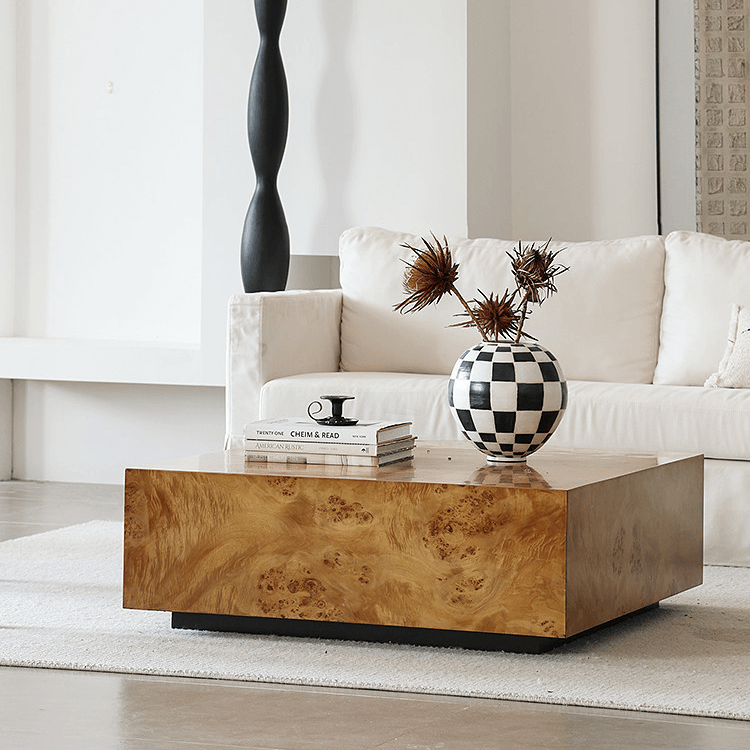
Natural Burlwood Cube Coffee Table
- Genuine French poplar burl veneer with one-of-a-kind swirling grain
- Floating cube silhouette elevated by a slim black metal base
- E1-grade plywood core for dimensional stability and high load capacity
- VOC-free matte finish, safe for homes with children
- Arrives fully assembled (100×100×35 cm)
3. Popular Styles of Burlwood Coffee Tables
One of the reasons burlwood coffee tables have remained so popular across design eras is their versatility. The same extraordinary material can be shaped into dramatically different forms, each with its own design language.
3.1. Waterfall Coffee Tables
The waterfall style is perhaps the most iconic silhouette for burlwood. The wood grain flows continuously from the tabletop over the edge and down to the floor on one or both sides, creating a seamless, sculptural form that showcases the natural beauty of the burl. This style works particularly well with large, dramatic slabs where the uninterrupted grain can truly shine.
3.2. Cube and Block Tables
Cube-shaped burlwood tables offer a bold, architectural presence. The geometric form provides an interesting contrast to the organic, unpredictable patterns of the wood, resulting in a piece that feels both structured and wild. These tables work beautifully as statement pieces in minimalist or contemporary interiors. For a deeper look at how this geometric form translates across materials, burl wood also shines in block coffee tables, where the cube silhouette turns the swirling grain into sculpture.
3.3. Round and Oval Tables
Round burlwood coffee tables have a softer, more approachable quality. The circular form allows the grain patterns to radiate outward from the center, creating a visual focal point that draws the eye. Round tables are particularly well-suited for smaller spaces or for seating arrangements where you want to encourage easy conversation.
3.4. Wabi-Sabi Inspired Tables
Drawing from the Japanese aesthetic philosophy of finding beauty in imperfection, wabi-sabi burlwood tables embrace the natural irregularities of the wood — cracks, voids, and all. These pieces often combine burlwood with other natural materials like travertine or limestone, creating coffee tables that feel like genuine works of art. The result is furniture that celebrates the raw, unrefined beauty of natural materials.
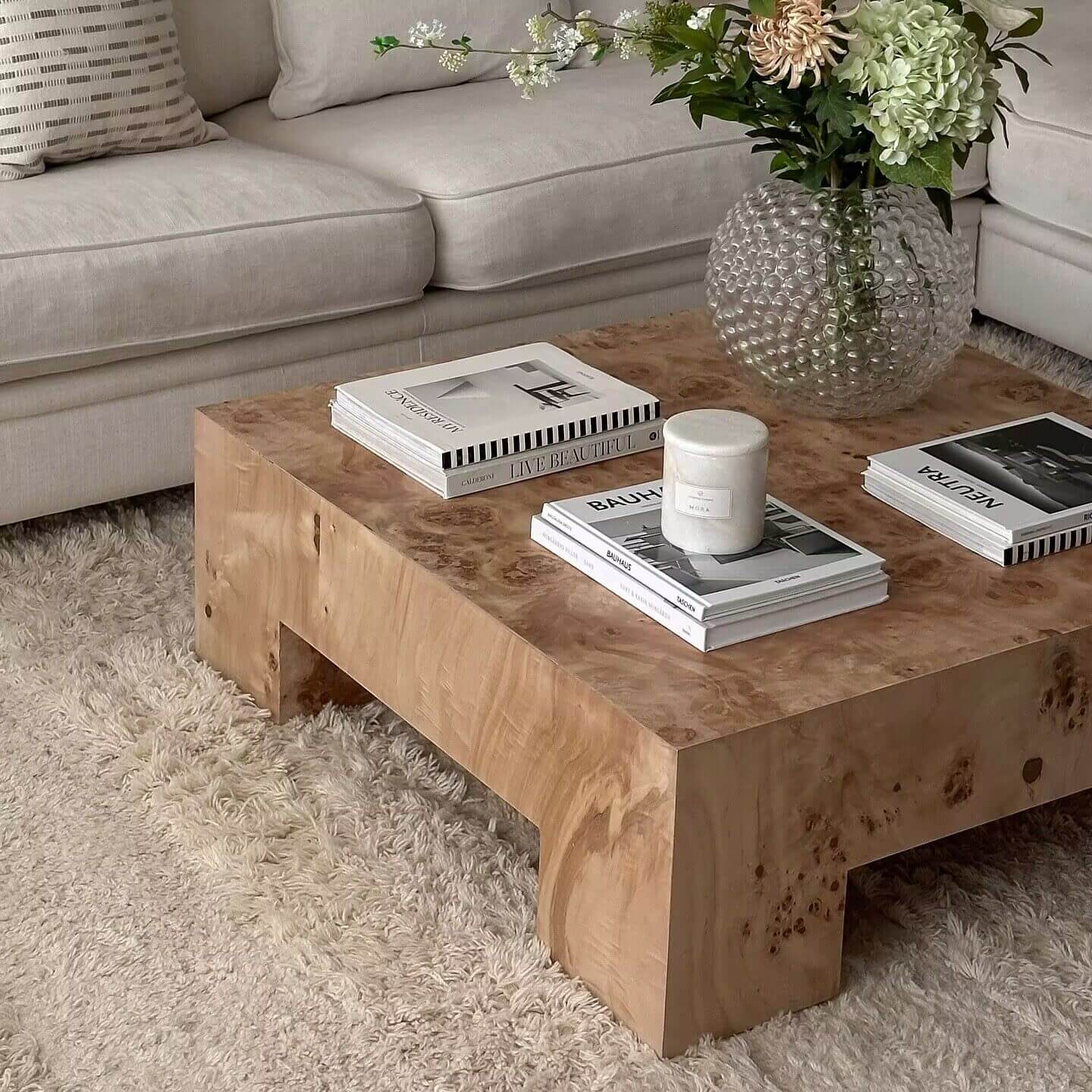
Mid-Century Inspired Burlwood Coffee Table
- Solid burlwood top with natural burl and ripple textures
- Low-profile square silhouette on a bridge-style solid wood base
- Warm honeyed tones that radiate quiet elegance
- Natural matte finish preserving the wood's authenticity
- No veneers or engineered wood; arrives fully assembled
3.5. Mid-Century Modern Tables
Burlwood has deep roots in mid-century design. In the 1950s and 1960s, designers like Milo Baughman elevated burlwood to luxury status, pairing it with sleek metal frames and clean geometric lines. Today, mid-century inspired burlwood coffee tables continue to be highly sought after for their timeless sophistication and warm, inviting character.
4. How to Choose the Right Burlwood Coffee Table
Selecting a burlwood coffee table is a more personal process than choosing most furniture. Because each piece of burlwood is unique, you are not simply picking a model — you are selecting a specific slab of wood with its own personality. Here are the key factors to consider:
4.1. Size and Proportions
A good rule of thumb is that your coffee table should be roughly half to two-thirds the length of your sofa, and it should sit at about the same height as the seat cushions, give or take four inches. If you have a sectional with a chaise, apply this guideline to the horizontal seating portion rather than the full length of the sofa. Always measure your space before shopping and leave at least 18 inches between the coffee table and the sofa for comfortable legroom.
4.2. Shape and Room Flow
Consider how people move through your living space. Round and oval tables are excellent for high-traffic areas or homes with children, as they eliminate sharp corners. Rectangular tables pair naturally with standard sofas, while square tables work well with sectionals or in larger rooms where they can hold their own visually.
4.3. Grain Pattern and Color
This is where the magic happens. Some burlwood slabs are wild and dramatic, with bold swirling patterns that demand attention. Others are more subdued, with fine, tight grain that adds texture without overwhelming the space. Think about the existing palette in your room — warmer burl varieties like walnut and elm complement earthy, neutral tones, while lighter varieties like maple work beautifully in brighter, airier spaces.
As designer Jennifer Hunter of Jennifer Hunter Design explains, "The beauty of burl is that it can pair so nicely with other materials, colors, and textures. A touch of burl can work in any space, as the type of wood unifies a space and brings all tones of wood and textures together since the wood has so many different hues."
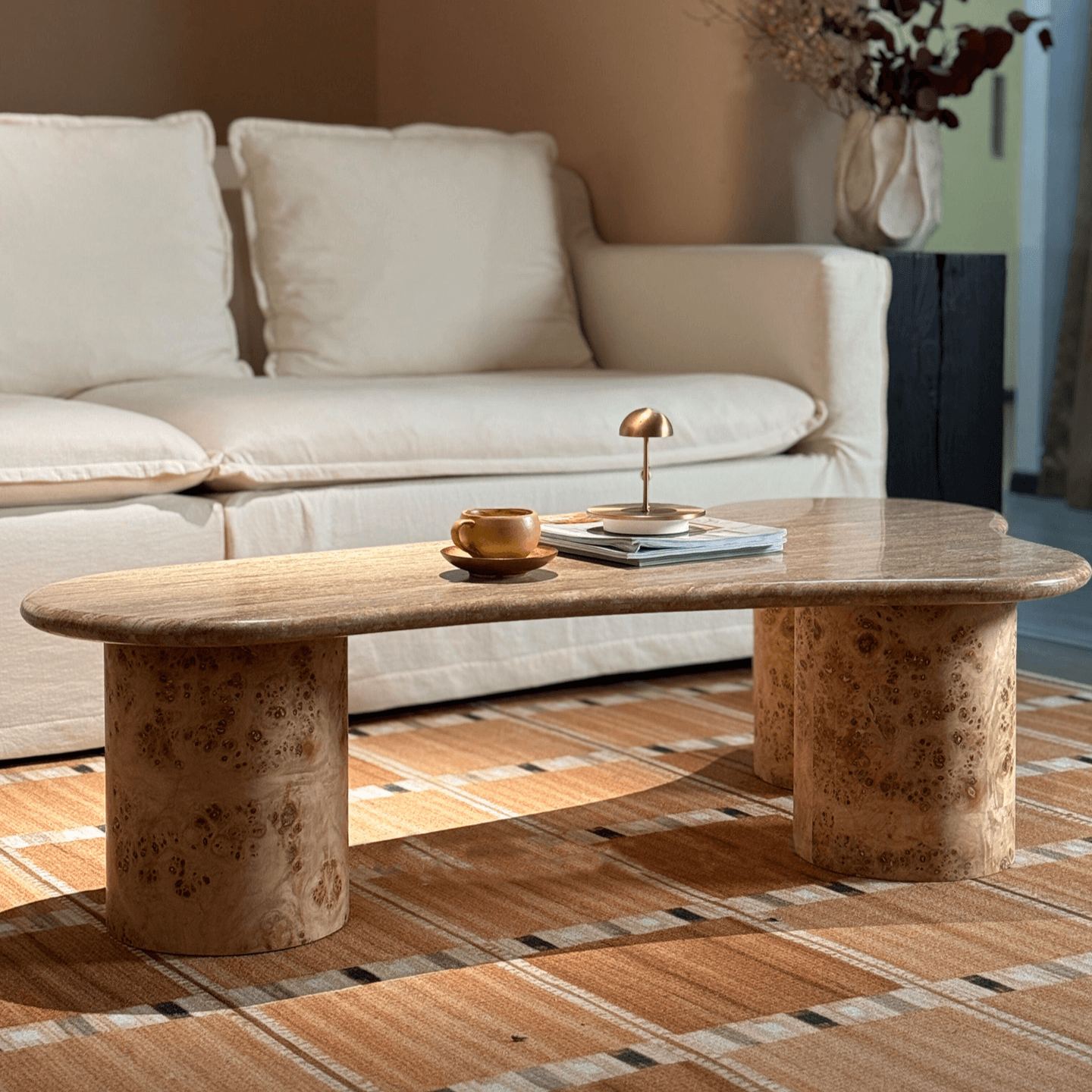
Travertine & Burlwood Wabi-Sabi Coffee Table
- Natural travertine tabletop with preserved organic voids and texture
- Sculptural burlwood legs grounding the design in wabi-sabi philosophy
- Generous oval silhouette without sharp corners
- Precision-cut polished edges for safe, refined detailing
- Each slab unique with warm beige veining
5. How to Style a Burlwood Coffee Table in Your Home
A burlwood coffee table is a natural focal point, so the key to styling it well is knowing when to let the wood speak for itself and when to layer in complementary elements.
5.1. In a Modern Living Room
Pair your burlwood table with clean-lined seating in neutral fabrics like linen or bouclé. Keep the tabletop styling minimal — a single sculptural object, a stack of art books, or a low ceramic vase allows the grain patterns to remain the center of attention. The contrast between the organic wood and the structured furniture creates a sophisticated tension that defines modern interiors.
5.2. In a Wabi-Sabi or Japandi Space
Burlwood is a natural fit for wabi-sabi aesthetics, which celebrate imperfection and the passage of time. Embrace the cracks, voids, and irregular edges that make each piece unique. Pair your table with other natural materials — stone, linen, handmade ceramics — and keep the overall palette warm and earthy. For a complementary take on organic design, explore our guide to live edge coffee tables. Less is truly more here.
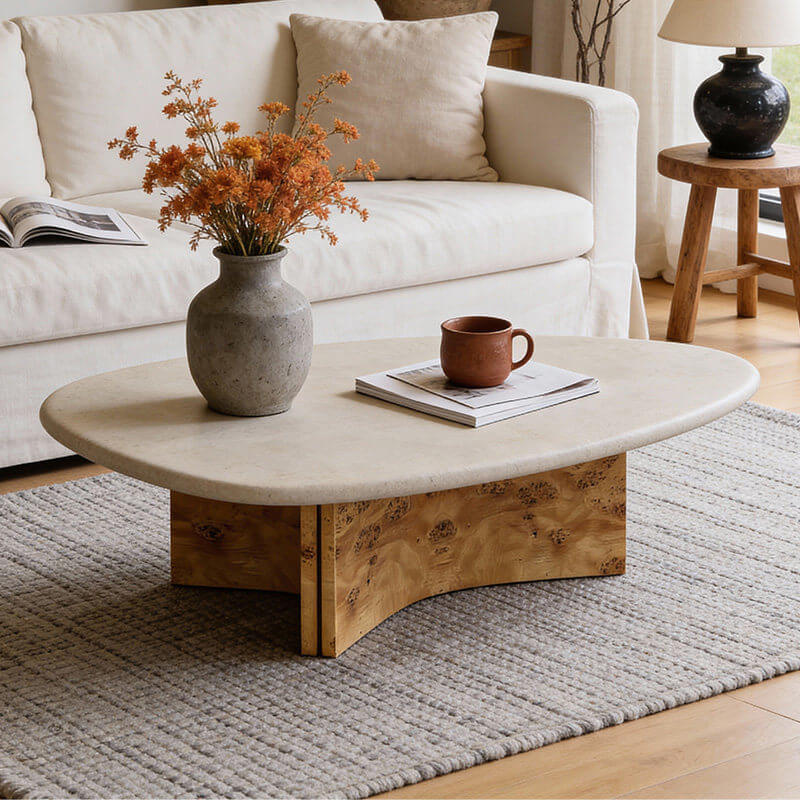
Wabi-Sabi Limestone Coffee Table with Burlwood Base
- Zero-radiation natural limestone tabletop with smooth rounded edges
- Sculptural poplar burl veneer base in warm earthy tones
- Organic river-worn silhouette that softens modern interiors
- Each piece unique in wood grain and stone texture
- Hand-finished for one-of-a-kind character
5.3. In a Mid-Century or Vintage Setting
Burlwood and mid-century design go hand in hand. Look for tables with tapered legs or metal frames that reference the iconic silhouettes of the 1950s and 1960s. Surround the table with other warm wood tones, leather seating, and pops of color through artwork or textiles. The layered warmth creates an inviting, collected-over-time feeling.
5.4. General Styling Tips
Regardless of your overall aesthetic, a few principles hold true. Be thoughtful about mixing burlwood with other heavily figured woods — too many competing patterns can feel chaotic. Instead, let the burlwood be the star and use solid-toned materials as supporting players. As designer Elizabeth Miles of Hundley Hilton Interiors suggests, "Have fun with burl. It can dress down a stuffy or formal space, and it feels playful and inviting in a more casual space."
6. How to Care for and Maintain Your Burlwood Coffee Table
A quality burlwood coffee table is an investment piece that can last for generations with proper care. The good news is that maintaining burlwood is not complicated — it simply requires consistency and a gentle touch.
6.1. Daily Care
Dust your table regularly with a soft, dry microfiber cloth. Dust may seem harmless, but over time it can act as a fine abrasive that dulls the finish. Wipe in the direction of the grain when possible, though with burlwood's swirling patterns, a gentle circular motion works just fine.
6.2. Protection
Always use coasters under drinks and trivets under hot items. Even sealed burlwood can develop water rings or heat marks if exposed directly. Consider placing felt pads under any decorative objects that sit directly on the surface to prevent scratches over time.
6.3. Spill Management
Accidents happen. When they do, blot spills immediately with a slightly damp cloth — do not rub, as this can push the liquid deeper into the grain. Dry the area thoroughly afterward. Avoid using harsh chemical cleaners, abrasive sprays, or furniture polishes that contain silicone, as these can build up and dull the natural luster of the wood.
6.4. Long-Term Maintenance
Every few months, give your table a deeper treatment with a high-quality wood wax or oil specifically formulated for fine furniture. Products like Danish oil or beeswax-based polishes nourish the wood and enhance the depth of the grain patterns. Apply with a lint-free cloth, following the manufacturer's instructions, and buff gently to restore the finish. Keep your table out of direct, prolonged sunlight to prevent fading, and try to maintain consistent humidity levels in your home to prevent the wood from drying out or cracking.
Frequently Asked Questions
What is burlwood and why is it so special?
Burlwood is a rare type of wood that forms when a tree develops a stress-induced growth, often caused by injury, fungal infection, or insect activity. The resulting wood features extraordinarily beautiful, swirling grain patterns that are completely unique to each piece. No two burlwood slabs are alike, which makes every burlwood coffee table a one-of-a-kind work of natural art.
How can I tell if my coffee table is real burlwood?
Genuine burlwood has irregular, swirling grain patterns that look organic and unpredictable — never repetitive or uniform. If the pattern repeats identically across the surface, it is likely a printed veneer or laminate. Real burlwood also has a tactile quality; run your fingers across the surface and you should feel subtle variations in the grain. The edges and end grain will also show the same interlocking patterns, not a flat, uniform surface.
Is burlwood furniture durable enough for everyday use?
Absolutely. Despite its unusual growth pattern, burlwood is remarkably dense and stable when properly dried and finished. Many burlwood coffee tables are built to withstand daily life, including the occasional bumped elbow or spilled drink. With basic care — using coasters, dusting regularly, and applying wood wax periodically — a quality burlwood table will maintain its beauty for decades. In fact, well-maintained burlwood pieces often become more valued over time.
Where does burlwood come from?
Burlwood develops on trees growing in forests around the world. The most sought-after varieties come from walnut, redwood, maple, and elm trees, primarily harvested in North America. Because burls are relatively rare and cannot be cultivated on demand, sourcing high-quality burlwood requires expertise and responsible forestry practices. Many premium furniture makers work with specialized suppliers who ensure the wood is harvested sustainably and ethically.
What makes a burlwood coffee table a worthwhile investment?
Several factors make burlwood coffee tables exceptional long-term investments. First, the material itself is rare — burls cannot be grown or manufactured, so supply is naturally limited. Second, each piece is genuinely unique, which means your table will never be mass-produced or easily replicated. Third, burlwood has a timeless aesthetic appeal that transcends trends; it has been prized in fine furniture for centuries, from 18th-century cabinetry to mid-century modern design to today's contemporary interiors. A well-crafted burlwood coffee table is not just furniture — it is a conversation piece, an heirloom, and a functional work of art all in one.
Conclusion
A burlwood coffee table is far more than just a surface to rest your coffee cup. It is a testament to the extraordinary artistry of nature — a piece of wood that has been shaped by stress, time, and the elements into something of profound beauty. From the swirling, kaleidoscopic grain patterns to the remarkable density and stability of the material, burlwood offers a combination of visual drama and practical durability that few other materials can match.
What I find most compelling about burlwood coffee tables is their ability to transform a room without demanding attention in an obvious way. They bring warmth, texture, and organic character to any space, whether your aesthetic leans toward clean-lined modernism, the imperfect beauty of wabi-sabi, or the timeless elegance of mid-century design. The key is choosing a piece whose grain pattern and color resonate with you personally — because with burlwood, you are not just selecting furniture, you are selecting a unique natural artifact that will be part of your home for years to come.
If you are ready to find the perfect burlwood coffee table for your space, explore our curated collection. Each piece is selected for its exceptional grain character, superior craftsmanship, and lasting quality — because your home deserves furniture that is as extraordinary as the wood itself.
SHOP BURLWOOD COFFEE TABLES 👉References
- [1] Living Spaces. "What Is Burl Wood? A Guide to the Sought-After Pattern." https://www.livingspaces.com/inspiration/ideas-advice/guides/what-is-burl-wood-a-guide-to-the-sought-after-pattern — Comprehensive guide covering burl wood formation, types, and uses in furniture.
- [2] Veranda. "What Is Burl Wood? Here's How Designers Want You to Decorate with It." https://www.veranda.com/home-decorators/design-trends/a65382485/what-is-burl-wood/ — Designer perspectives on styling and incorporating burl wood in interiors.
- [3] Global Wood Source. "A Guide to Creating a Vintage Burl Wood Coffee Table." https://www.globalwoodsource.com/blog/a-guide-to-creating-a-vintage-burl-wood-coffee-table/ — Guide on burl wood species selection and finishing techniques.
- [4] Style by Emily Henderson. "Rules For Picking a Coffee Table." https://stylebyemilyhenderson.com/rules-for-picking-a-coffee-table-105-best-coffee-tables — Coffee table sizing, shape, and sofa pairing guidelines.

Written by Mia Taylor
Mia Taylor has been exploring the worlds of home design, travel, and fashion since 2022. With a foundation in interior design and hands-on experience in a furniture store, she shares stories and insights that inspire readers while creating a genuine emotional connection.

COCOCHAIRS Programs
At COCOCHAIRS, we craft modern furniture with timeless design and reliable craftsmanship for homes and commercial spaces.
B2B Trade Program: Trade pricing & project support → https://cocochairs.com/pages/b2b
Affiliate Program: Earn 10% per sale, free to join → https://cocochairs.com/pages/affiliate


