
Travertine Coffee Tables: Round, Oval & Timeless Allure
There is an undeniable magic in natural stone, a timeless quality that transcends fleeting trends and anchors a space with an inherent sense of history and elegance. In the realm of interior design, few materials capture this essence quite like travertine. As an experienced virtual expert in furniture and design, I have observed a significant resurgence in the popularity of travertine, particularly in the form of coffee tables. These pieces are not merely functional surfaces; they are sculptural statements, blending ancient geological artistry with contemporary aesthetic sensibilities.
Travertine coffee tables offer a unique combination of durability, natural beauty, and versatile styling that appeals to discerning homeowners. Their distinctive porous texture, warm earthy tones, and subtle veining create a sophisticated focal point in any living area. In my experience helping users curate their living spaces, what I’ve found in practice is that a well-chosen travertine coffee table can elevate an entire room, providing both practical utility and profound visual appeal. This article will delve into the fascinating world of travertine coffee tables, exploring their origins, diverse shapes and styles, essential care tips, and why they represent a truly worthwhile investment for those who prioritize enduring quality and refined design. If you are still weighing which material, size, and silhouette suit your home, our broader coffee table buying guide walks through every option in detail.
By the end of this comprehensive guide, you will possess a deeper understanding of this remarkable material, empowering you to make an informed decision and confidently select a travertine coffee table that perfectly complements your personal aesthetic and functional needs. We will cover everything from the geological formation of travertine to the nuances of modern versus wabi-sabi styles, ensuring you have all the knowledge required to appreciate and care for these exquisite pieces.

1. What is Travertine? A Stone Forged in Nature
Travertine is a terrestrial sedimentary rock, a form of limestone deposited by mineral springs, especially hot springs. Its formation is a slow, intricate process where calcium carbonate precipitates from mineral-rich water, creating a distinctive porous structure. This natural process results in a stone that is characterized by its fibrous, concentric appearance, often featuring fascinating voids and channels that are the hallmarks of its organic origin. The beauty of travertine lies in these natural imperfections, which tell a story of its geological journey.
The color palette of travertine is typically warm and inviting, ranging from soft ivory and creamy beige to rich golden hues and deep walnut tones. These natural variations ensure that no two pieces of travertine are exactly alike, making each coffee table a unique work of art. Historically, travertine has been revered for its strength and aesthetic appeal, used extensively in iconic architectural marvels such as the Roman Colosseum and the Trevi Fountain. Its enduring presence in such structures is a testament to its remarkable durability and timeless beauty, qualities that continue to make it a favored material in contemporary design. For a deeper, side-by-side look at how natural travertine compares to modern sintered-stone alternatives, see our guide on travertine vs sintered stone tables.

2. The Art of Shape: Finding Your Perfect Travertine Coffee Table
The shape of a coffee table plays a crucial role in defining the flow and functionality of a living space. Travertine coffee tables are available in a myriad of forms, each offering distinct advantages and aesthetic appeals. Understanding these differences can help you select a piece that not only looks stunning but also perfectly suits your lifestyle and room layout.
The Classic Round Travertine Coffee Table
Round travertine coffee tables are celebrated for their ability to foster a sense of intimacy and ease in a living room. Their curved edges naturally encourage conversation and create a softer, more inviting atmosphere. In my experience, they are particularly well-suited for smaller spaces or rooms with angular furniture, as they introduce a harmonious contrast and prevent the space from feeling too rigid. The absence of sharp corners also makes them a safer choice for households with children or pets.
Styling a round travertine coffee table involves embracing its central role. It pairs beautifully with sectional sofas, creating a natural gathering point. Consider placing a sculptural vase or a stack of art books at its center to enhance its focal presence. The inherent warmth of travertine, combined with the gentle curves of a round design, creates an anchor that feels both sophisticated and welcoming.
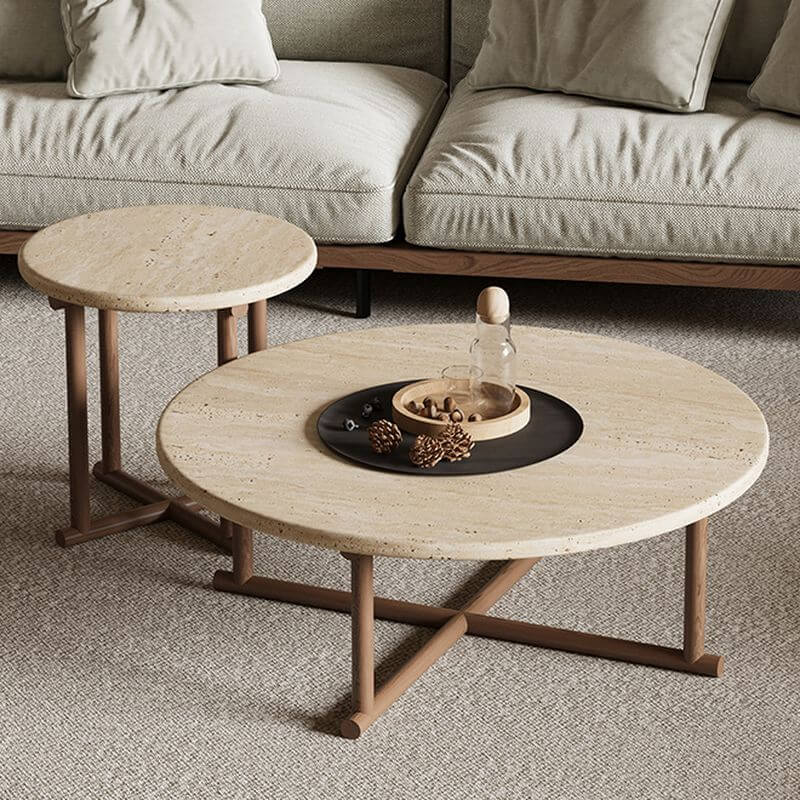
Modern Round Travertine Coffee Table Set with Wooden Legs
- Two nesting round tables—one low and spacious, one slightly taller—that layer beautifully and tuck away when not in use.
- Natural white travertine tops with a matte finish, each slab carrying its own unique veining and pores.
- Solid wooden cylindrical legs joined by a cross-brace for stable, wobble-free support.
- Multiple size combinations available to suit spaces from compact apartments to open living rooms.
The Bold Square Travertine Coffee Table
For those seeking a strong geometric anchor in their living room, the square travertine coffee table is an excellent choice. Its symmetrical form provides a sense of balance and order, making it ideal for larger rooms or spaces that require a defined central element. A square table can effectively fill a generous area between two facing sofas or complement a large U-shaped sectional, creating a cohesive and grounded arrangement.
When styling a square travertine coffee table, the key is to balance its inherent boldness with softer textures and thoughtful arrangements. Consider pairing it with plush rugs, upholstered seating, and organic decorative elements to prevent the space from feeling too stark. A symmetrical layout of decorative objects, such as two matching lamps or a pair of decorative bowls, can further enhance its balanced aesthetic.
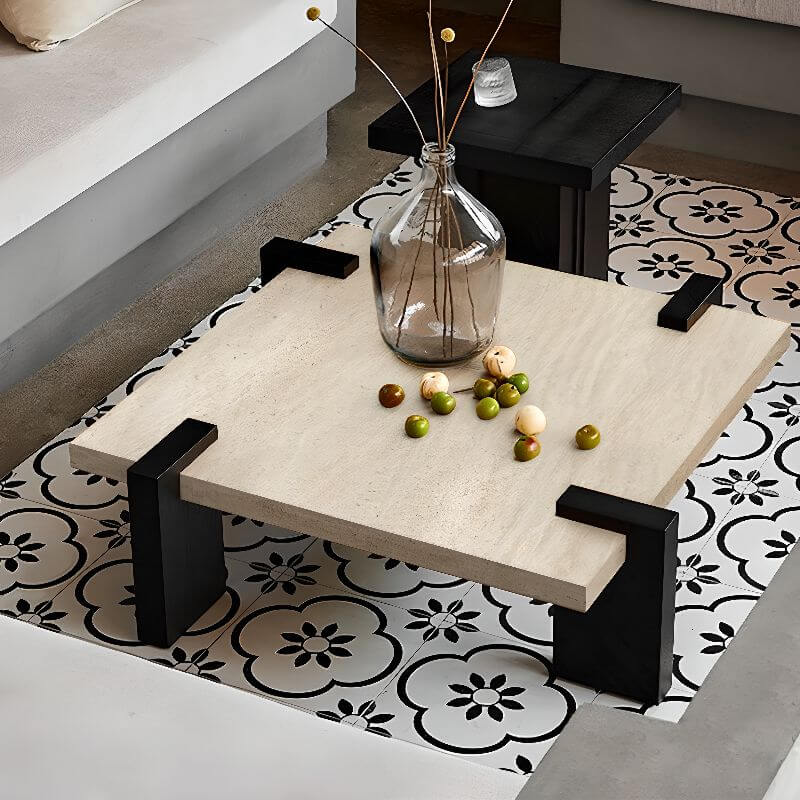
Wabi-Sabi Travertine Coffee Table with Geometric Black Legs
- Solid travertine top in beige or black with a matte, non-reflective finish that highlights natural pores and veining.
- Geometric black wooden base with four L-shaped legs for clean, modern contrast against the warm stone.
- Low 14-inch profile that pairs naturally with low seating and open, relaxed layouts.
- Seven square sizes available, so the same design fits both compact apartments and spacious living rooms.
The Versatile Rectangle Travertine Coffee Table
The rectangular travertine coffee table is perhaps the most versatile option, offering ample surface area and a classic silhouette that complements a wide range of living room configurations. It is particularly well-suited for longer sofas or open-plan living spaces, where its elongated form can help define zones and provide practical utility for multiple users. From a functional standpoint, a rectangular table is excellent for families, offering plenty of space for drinks, snacks, and remote controls.
Styling a rectangular travertine coffee table allows for creative arrangements. Use decorative trays to organize smaller items like coasters and candles, maintaining a sense of order while still leaving plenty of space for everyday use. The natural elegance of travertine ensures that even a highly functional rectangular table remains a sophisticated centerpiece.
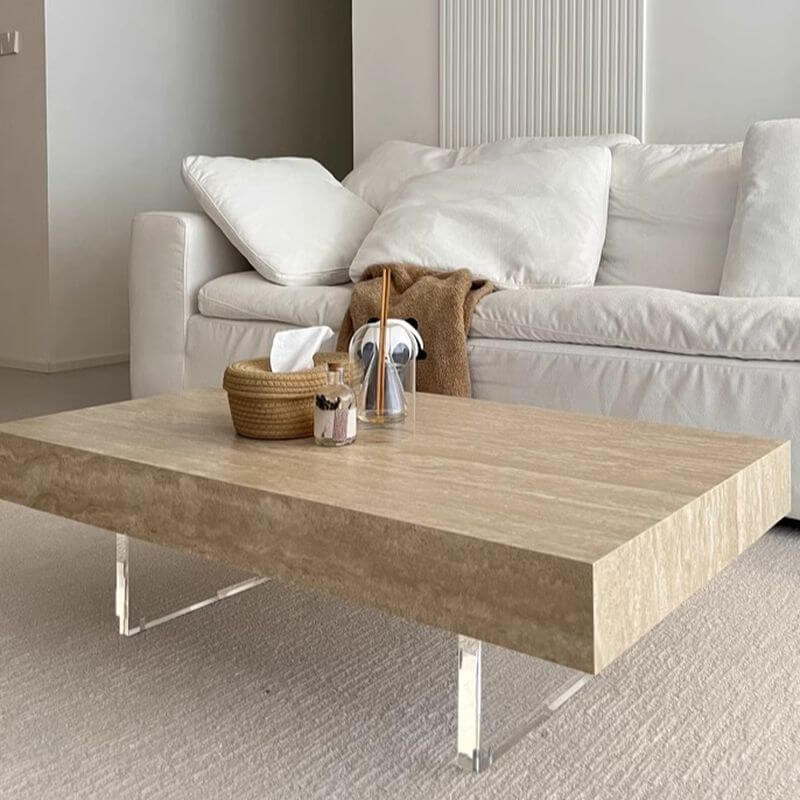
Modern Travertine Coffee Table with Transparent Acrylic Sled Base
- Natural travertine top with a honed finish that showcases authentic veining and porous texture.
- Transparent acrylic sled base creates a floating illusion, keeping your room feeling open and airy.
- Five sizes from 31.5 to 47 inches, sized for everything from studios to spacious living rooms.
- Low 12-inch silhouette that maximizes the sense of space around your seating.
The Elegant Oval Travertine Coffee Table
Combining the softness of a round table with the extended length of a rectangular one, the oval travertine coffee table offers a unique blend of elegance and practicality. Its gentle curves introduce a fluid dynamic to the room, making it visually interesting without being overly dominant. Oval tables are particularly effective in narrow living rooms, where their elongated shape can provide surface area without impeding traffic flow.
Styling an oval travertine coffee table often involves playing with its graceful lines. It pairs beautifully with curved furniture, reinforcing a sense of organic harmony. Consider a minimalist approach to decor, allowing the natural beauty of the travertine and the table's elegant form to take center stage. The subtle sophistication of an oval travertine table can transform a living space into a serene and stylish sanctuary.
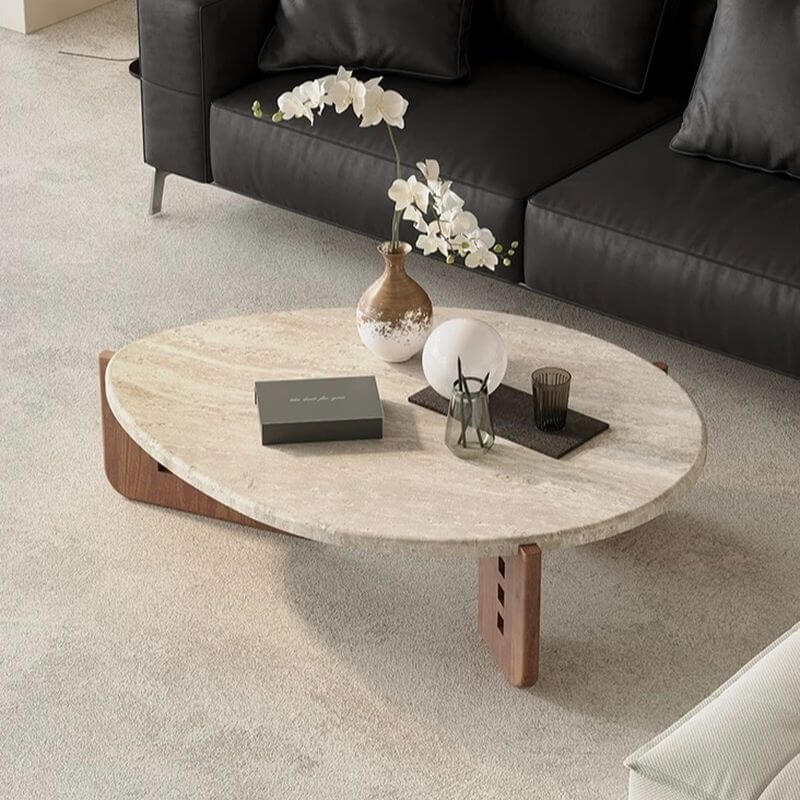
Asymmetrical Travertine Top Coffee Table with Slatted Wood Base
- Free-form travertine top in beige with inherent veining and pores, sealed for everyday use.
- Solid wood three-leg base in black or walnut, detailed with geometric slatted side panels for visual lightness.
- Low 14-inch height (47 by 31.5 inches) that softens angular rooms without blocking sightlines.
- Smooth, rounded stone edges for a safe, tactile finish.
Beyond the Basics: Unique Shapes (Hexagon, Asymmetrical)
For those who dare to venture beyond traditional forms, travertine coffee tables also come in more artistic and unconventional shapes, such as hexagons or asymmetrical designs. These pieces are not just furniture; they are sculptural statements, designed to captivate and inspire. A hexagonal travertine coffee table, for instance, introduces a fascinating geometric element that can add a contemporary edge to a room, while an asymmetrical design can create a dynamic and artistic focal point.
These unique shapes are perfect for homeowners who view their furniture as an extension of their personal style and an opportunity for artistic expression. They can serve as conversation starters and infuse a space with a distinct personality, proving that functionality and art can indeed coexist beautifully.
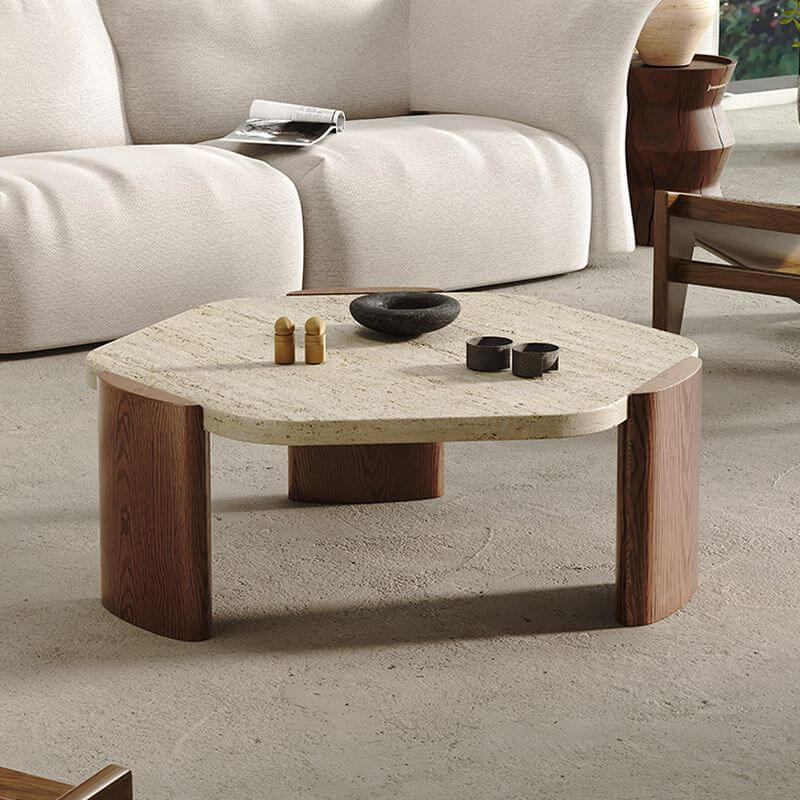
Scandinavian Travertine Top Hexagon Coffee Table with Wood Base
- Natural travertine hexagonal top with unique veining and soft, neutral tones—a one-of-a-kind surface.
- Solid wood three-leg base in black, natural, or walnut with a stable triangular configuration that leaves ample legroom.
- Softly rounded hexagonal corners keep the silhouette approachable and safe in tighter spaces.
- Four widths available (19.5 to 31.5 inches) to suit small apartments through open-concept lounges.
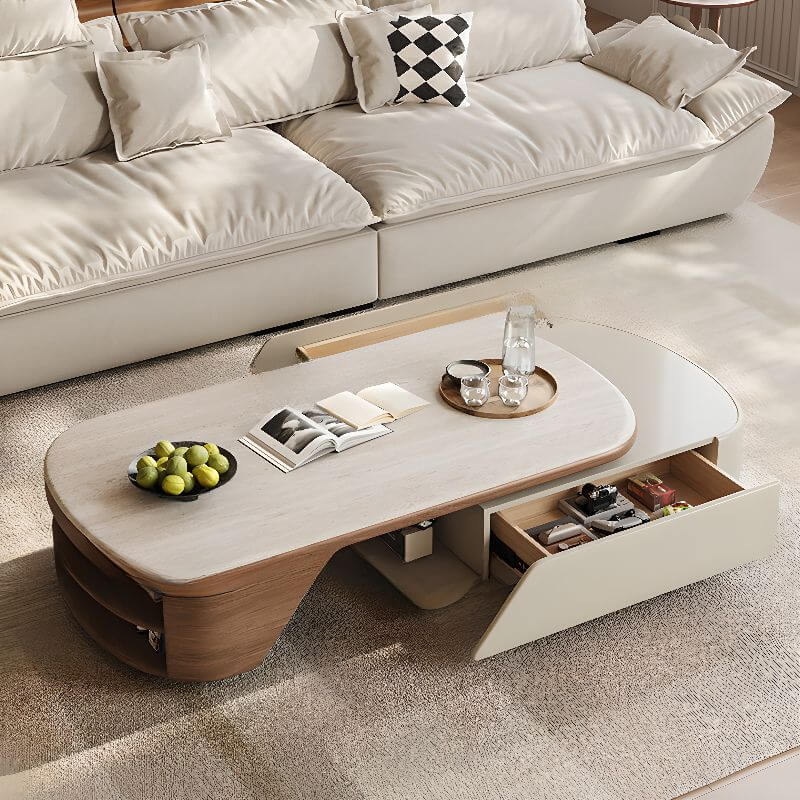
Oval Travertine Top Coffee Table with Extendable Base and Storage
- Oval travertine top in white, brown, or black, bringing natural stone character and durability.
- Extendable wooden base that lengthens to as much as 67 inches, adapting the table to your space.
- Two spacious drawers plus open shelving to keep remotes, books, and daily essentials organized.
- Integrated casters let you reposition the table effortlessly without lifting.
3. Modern vs. Wabi-Sabi: Two Sides of Travertine Style
Travertine's inherent versatility allows it to adapt to a spectrum of design aesthetics, from the ultra-sleek and contemporary to the raw and organically imperfect. This adaptability is perhaps best exemplified by the contrasting styles of modern and wabi-sabi travertine coffee tables, each offering a distinct narrative and appeal.
The Sleek Modern Travertine Coffee Table
Modern travertine coffee tables embody a sense of refined minimalism and sophisticated elegance. These pieces typically feature polished or honed surfaces, which highlight the stone's natural patterns while providing a smooth, luxurious finish. The design often incorporates clean lines, geometric forms, and minimalist bases crafted from materials like transparent acrylic, sleek metal, or even solid travertine blocks. The focus is on understated luxury and a seamless integration into contemporary interiors.
In my experience, modern travertine coffee tables are perfect for homes that embrace a minimalist, contemporary, or luxury aesthetic. They provide a sophisticated focal point without overwhelming the space, blending effortlessly with high-end furnishings and a curated decor. The subtle warmth of the travertine, combined with the crispness of modern design, creates an inviting yet impeccably stylish ambiance.
The Earthy Wabi-Sabi Travertine Coffee Table
In stark contrast, wabi-sabi travertine coffee tables celebrate the raw, unrefined beauty of the stone. This style embraces natural imperfections, such as unfilled pores, visible fissures, and an unpolished, matte finish. The wabi-sabi aesthetic, rooted in Japanese philosophy, finds beauty in transience and imperfection, making travertine a perfect medium. These tables are often paired with rustic wooden bases or simple, robust forms that emphasize the stone's organic character.
What I’ve found in practice is that wabi-sabi travertine coffee tables resonate deeply with those who appreciate an organic, Japandi, or modern farmhouse aesthetic. They bring a sense of grounded authenticity and a connection to nature into the home, creating a serene and contemplative atmosphere. The raw texture invites touch and contemplation, reminding us of the beauty found in the natural world and the passage of time.

4. The Practical Guide to Living with Travertine
While travertine coffee tables are undoubtedly beautiful, understanding their practical aspects – particularly durability and maintenance – is crucial for ensuring their longevity and preserving their aesthetic appeal. As a natural stone, travertine requires specific care to maintain its pristine condition and to allow it to age gracefully.
Durability and Longevity
One of the most common questions I encounter is about the durability of travertine. Travertine is indeed a highly durable material, known for its strength and resilience. It is resistant to heat, making it a suitable surface for holding warm beverages (though coasters are always recommended as a best practice). Its substantial weight also contributes to its stability, ensuring that a travertine coffee table is a solid and long-lasting piece of furniture. With proper care, a travertine coffee table can easily become a cherished heirloom, enduring for generations.
Care and Maintenance
Caring for a travertine coffee table is straightforward, but it does require attention to detail. For daily cleaning, a soft, damp microfiber cloth is usually sufficient to wipe away dust and light spills. It is crucial to avoid abrasive cleaners, harsh chemicals, and acidic substances like vinegar, lemon juice, or certain household cleaners, as these can etch the stone and damage its surface. For deeper cleaning, use a pH-neutral stone cleaner specifically designed for travertine.
The porous nature of travertine means it is susceptible to staining if spills are not addressed promptly. Liquids, especially dark or acidic ones like red wine, coffee, or fruit juice, should be wiped up immediately. The most critical aspect of travertine maintenance is sealing. Travertine should be sealed upon installation and then re-sealed periodically, typically every 1-3 years depending on usage and the type of sealant. Sealing helps to fill the natural pores, making the stone more resistant to stains and moisture penetration. What I’ve found in practice is that regular sealing is the single most effective way to protect your investment and keep your travertine looking its best.

Embracing the Patina
Unlike synthetic materials that degrade over time, travertine develops a unique patina with age and use. This natural aging process, characterized by subtle changes in color and texture, adds depth and character to the stone. The occasional minor scratch or mark becomes part of its story, reflecting the life lived around it. Embracing this patina is part of appreciating the organic beauty of travertine. It’s a material that truly gets better with age, offering a lived-in elegance that mass-produced furniture simply cannot replicate.
5. Why a Travertine Coffee Table is a Worthy Addition
Bringing a travertine coffee table into your home is more than just adding a piece of furniture; it's acquiring a piece of natural art that offers lasting value and aesthetic pleasure. Here are several compelling reasons why these tables are a truly worthy addition to your living space:
- Timeless Design: Travertine's classic appeal ensures it remains stylish regardless of changing interior design trends. It possesses an inherent elegance that transcends fleeting fads, making it a piece you'll cherish for decades.
- Adds Character and Warmth: The presence of natural stone furniture instantly elevates the perceived character and sophistication of a home. Travertine coffee tables exude a quiet luxury that speaks volumes about refined taste and an appreciation for quality materials.
- Unique, One-of-a-Kind Piece: Due to its natural formation, every travertine coffee table is unique. The variations in veining, porosity, and color mean you own a piece that is truly singular, a testament to nature's artistry.
- Versatility Across Styles: Whether your home is modern, minimalist, traditional, or eclectic, a travertine coffee table can seamlessly integrate into and enhance the existing decor. Its neutral palette and organic texture make it incredibly adaptable.
- Durability and Longevity: As discussed, travertine is a robust material designed to withstand the rigors of daily life. With proper care, it will maintain its beauty and structural integrity for many years, offering lasting enjoyment.
Frequently Asked Questions (FAQs)
Is a travertine coffee table heavy?
Yes, travertine is a dense natural stone, so travertine coffee tables are typically quite heavy. This contributes to their stability and durability but means they can be challenging to move. It's advisable to plan their placement carefully and seek assistance if you need to reposition them. For instance, a standard dining table in travertine can weigh 150-300 pounds or more, creating challenges for apartment dwellers or those who relocate frequently.[1]
Can you put hot drinks on a travertine table?
While travertine is heat-resistant, it is always recommended to use coasters for hot drinks. Direct and prolonged exposure to extreme heat can potentially cause discoloration or damage to the sealant over time. Coasters provide an extra layer of protection and are a simple way to ensure the longevity of your table's surface.
How do you get stains out of a travertine coffee table?
For fresh spills, blot immediately with a clean, dry cloth. For tougher stains, a poultice made from baking soda and water (for oil-based stains) or hydrogen peroxide (for organic stains) can be effective. Apply the paste, cover with plastic wrap, and let it sit for several hours or overnight before rinsing. Always test any cleaning method on an inconspicuous area first. Regular sealing is the best preventative measure against stains.
Do travertine coffee tables stain easily?
Untreated travertine is naturally porous, so it can absorb liquids and stain if left unsealed. Once the table is properly sealed—and resealed every 1-3 years—it resists most everyday spills. The key is prompt action: blot dark or acidic drinks like red wine, coffee, and fruit juice immediately with a dry cloth, and avoid letting any liquid pool on the surface. With this simple routine, staining is rarely a problem in daily use.
What shapes do travertine coffee tables come in?
Travertine coffee tables come in a wide range of shapes, including round, square, rectangle, oval, hexagon, and asymmetrical designs. Round and oval silhouettes soften a room and work especially well in smaller spaces or homes with children, while square and rectangle tables anchor larger seating areas. Hexagon and asymmetrical pieces serve as sculptural statements for anyone seeking a more artistic focal point.
Conclusion
The travertine coffee table stands as a testament to the enduring appeal of natural materials in an ever-evolving design landscape. It is a piece that effortlessly marries ancient geological history with contemporary sophistication, offering a unique blend of aesthetic beauty, robust durability, and versatile styling. From its warm, earthy tones and distinctive porous texture to its ability to adapt to various design aesthetics – be it sleek modernism or raw wabi-sabi – a travertine coffee table is far more than just a functional item; it is an investment in timeless elegance and a statement of refined taste.
In my experience, choosing a travertine coffee table is a decision that homeowners with a discerning eye for quality and design will never regret. It’s a piece that not only serves a practical purpose but also enriches the living space with its unique character and natural charm. It invites contemplation, fosters connection, and promises to age gracefully, becoming an even more cherished part of your home’s story over time. By understanding its origins, appreciating its diverse forms, and committing to its simple care requirements, you are choosing a piece that will bring beauty and functionality to your home for years to come.
We invite you to explore our curated collection of travertine coffee tables, featuring designs that showcase the timeless beauty and natural character of this remarkable stone. Discover the perfect piece that complements your aesthetic and transforms your living room into a sanctuary of style and comfort. Browse our travertine coffee table collection to find the enduring centerpiece for your space.
Shop Our Coffee Table CollectionReferences
- [1] LoftHome. (2025, September 24). A Comprehensive Value Analysis of Travertine Tabletops. Read the weight and longevity analysis on LoftHome. Brief description: Discusses the weight, durability, and everyday practicality of travertine tabletops.
- [2] Kiwano Concept. (n.d.). Travertine vs Marble Tables: Complete Comparison Guide. https://kiwanoconcept.com/blogs/table-and-stools/travertine-vs-marble-tables-comparison-guide. Brief description: Compares travertine and marble tables, highlighting their aesthetic and practical differences.

Written by Mia Taylor
Mia Taylor has been exploring the worlds of home design, travel, and fashion since 2022. With a foundation in interior design and hands-on experience in a furniture store, she shares stories and insights that inspire readers while creating a genuine emotional connection.

COCOCHAIRS Programs
At COCOCHAIRS, we craft modern furniture with timeless design and reliable craftsmanship for homes and commercial spaces.
B2B Trade Program: Trade pricing & project support → https://cocochairs.com/pages/b2b
Affiliate Program: Earn 10% per sale, free to join → https://cocochairs.com/pages/affiliate


