
Elegant Stone Tables: A Guide to Choosing the Perfect Material for Your Home

When it comes to creating a statement in your home, few pieces of furniture carry the same weight—both literally and figuratively—as a stone table. Whether it is the centerpiece of your dining room or a sophisticated addition to your living space, a stone table is more than just a surface; it is a piece of the earth brought indoors. For homeowners with refined taste, the choice of stone is a reflection of their personal aesthetic and a commitment to long-term quality. However, with so many options available, from the classic allure of marble to the modern resilience of sintered stone, the selection process can feel overwhelming. This guide is designed to educate you on the diverse world of stone tables, helping you navigate the nuances of material, durability, and style to find the perfect match for your lifestyle.
In this comprehensive exploration, we will delve into the unique characteristics of seven distinct stone types: Marble, Granite, Slate, Sintered Stone, Quartz, Travertine, and Terrazzo. We will examine their origins, their practical advantages and disadvantages, and how to maintain their beauty for decades to come. By the end of this article, you will not only understand the technical differences between these materials but also gain expert insights into which stone best suits your specific needs, ensuring that your investment brings joy and value to your home for years to come.
The Timeless Elegance of Marble Tables

Marble has been the gold standard of luxury for millennia. From the statues of ancient Greece to the grand halls of the Renaissance, this metamorphic rock has always symbolized prestige and artistic beauty. In the context of modern furniture, a marble table is a masterpiece of nature. Each slab is unique, featuring intricate veining patterns that are impossible to replicate. Whether you prefer the crisp white of Carrara or the dramatic dark tones of Nero Marquina, marble brings an immediate sense of sophistication to any room.
However, marble is as delicate as it is beautiful. As a porous natural stone, it is susceptible to "etching"—a chemical reaction that occurs when acidic substances like lemon juice or wine come into contact with the surface, leaving dull spots. In my experience helping clients select their dream dining tables, I often find that while everyone loves the look of marble, it is best suited for those who view the inevitable "patina" of age as a story rather than a flaw. If you are someone who hosts frequent dinner parties with red wine and citrus-heavy dishes, you must be prepared for a higher level of maintenance, including regular sealing and immediate cleanup of spills.
Despite its sensitivity, marble remains a top choice for its heat resistance and cool-to-the-touch surface. It is a material that breathes life into a space, reflecting light in a way that few other stones can. To keep your marble table looking its best, use coasters and placemats religiously, and clean only with pH-neutral stone cleaners. Avoid abrasive sponges that can scratch the polished finish. With the right care, a marble table is not just furniture; it is an heirloom.
The Unrivaled Strength of Granite Tables

If marble is the poet of the stone world, granite is the warrior. Formed deep within the earth's crust from cooled magma, granite is one of the hardest natural materials available for furniture. Its composition of quartz, feldspar, and mica gives it a distinctive speckled appearance and incredible structural integrity. For a busy household where the dining table serves as a workstation, a craft center, and a meal hub, granite is often the most practical natural stone choice.
Granite's primary advantage is its extreme durability. It is highly resistant to scratches, heat, and impact. You can place a hot pot directly on a granite surface without fear of thermal shock or scorching. Unlike marble, granite is less reactive to acids, making it much more forgiving in a kitchen or dining environment. What I’ve found in practice is that granite is the "set it and forget it" option for natural stone lovers. It offers the organic beauty of the earth with a fraction of the anxiety associated with softer stones.
Maintenance for granite is relatively straightforward. While it is less porous than marble, it still requires periodic sealing—typically once a year—to maintain its stain resistance. The variety of colors available in granite is staggering, ranging from deep galaxy blacks to vibrant blues and earthy greens. This versatility allows it to fit into both traditional and ultra-modern interior designs. If you want a table that can withstand the rigors of daily life while still looking magnificent, granite is a formidable contender.
The Modern Sophistication of Slate Tables

Slate is often overlooked in the luxury furniture market, but it is a hidden gem for those who appreciate a more understated, industrial, or rustic aesthetic. This fine-grained, foliated metamorphic rock is famous for its unique "cleft" texture—the natural layers that form when the stone is split. A slate table offers a tactile experience that polished stones like marble or granite cannot match. Its matte finish and deep, moody tones make it a perfect anchor for a contemporary living room.
One of the most significant benefits of slate is its natural resistance to water and stains. Because it is very dense and has low porosity, it does not require the same frequent sealing as other natural stones. It is also exceptionally heat resistant, which is why it has historically been used for fireplace hearths and laboratory benches. In my years of helping users design their spaces, I’ve noticed that slate is particularly popular among those who want a "quiet luxury" look—something that feels expensive and high-quality without being flashy or reflective.
However, slate does have its quirks. While it is hard, it can be brittle. The edges of a slate table can chip if struck with a heavy object, and the layered nature of the stone means it can occasionally "flake" slightly when new. To care for a slate table, a simple wipe with a damp cloth is usually sufficient. Occasional application of slate oil can help deepen the color and provide an extra layer of protection. If you are looking for a material that feels grounded and authentic, slate is an excellent choice.
Sintered Stone: The Pinnacle of Engineering

Sintered stone is the "new kid on the block" that is rapidly taking over the high-end furniture world. Unlike natural stones that are quarried, sintered stone is manufactured using a process called "sintering," which mimics the way natural stone is formed in the earth but at an accelerated pace. Natural minerals are subjected to extreme pressure and high temperatures, resulting in a material that is virtually indestructible. It can be made to look like marble, wood, or even metal, but with performance characteristics that far exceed the originals.
The list of pros for sintered stone is extensive: it is completely non-porous, meaning it will never stain; it is scratch-proof, so you can cut directly on it; it is UV resistant, making it suitable for outdoor use; and it is incredibly heat resistant. When I am helping clients who have young children or pets, I almost always steer them toward sintered stone. It provides the high-end look of marble without any of the stress. You can spill turmeric, red wine, or even permanent marker on it, and it will wipe right off.
Another advantage of sintered stone is its weight-to-strength ratio. Because it is so strong, it can be produced in very thin slabs, allowing for sleek, minimalist table designs that would be impossible with natural stone. The only real "con" is that because the pattern is printed on the surface, the veining does not always go all the way through the thickness of the slab. If you want the ultimate in performance and modern design, sintered stone is the clear winner.
Quartz Tables: The Perfect Balance of Beauty and Utility

Quartz, also known as engineered stone, is a composite material made of roughly 90-95% crushed natural quartz and 5-10% polymer resins and pigments. This combination creates a surface that is incredibly consistent in color and pattern, which is a major draw for designers who want a specific look without the "surprises" that come with natural stone slabs. Quartz has become a staple in modern kitchens and is now a highly popular choice for dining and coffee tables.
The primary draw of quartz is its non-porous nature. Thanks to the resin binder, quartz never needs to be sealed and is highly resistant to staining and bacterial growth. It is also very hard and durable, making it resistant to scratches and chips. In my experience, quartz is the ideal middle ground for homeowners who find natural stone too high-maintenance but find sintered stone a bit too "industrial." It has a warmth and depth that feels very close to natural stone while offering modern convenience.
However, there is one critical thing to remember about quartz: it is not as heat resistant as natural stone or sintered stone. The resins used to bind the quartz can melt or discolor if exposed to high temperatures. This means you must always use trivets for hot pots and pans. Additionally, quartz is not recommended for outdoor use, as prolonged exposure to direct sunlight can cause the resins to yellow or fade. For indoor use, however, it remains one of the most practical and beautiful options on the market.
Travertine Tables: The Warmth of Earthy Tones
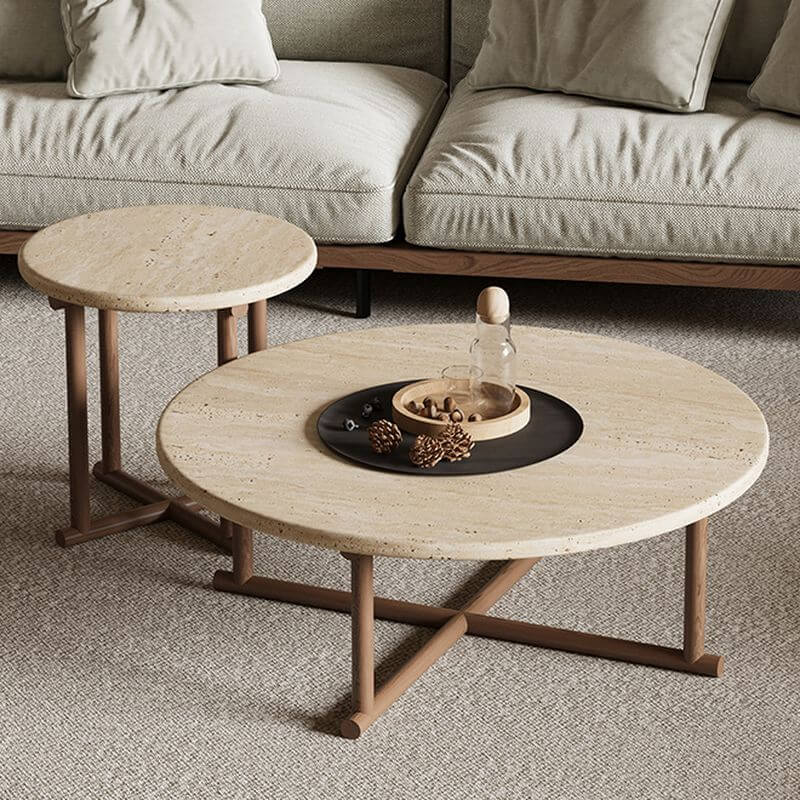
Travertine is a form of terrestrial limestone deposited around mineral springs. It is characterized by its unique pitted surface and fibrous, marble-like appearance. Historically, it was used to build the Colosseum in Rome, and today, it is a favorite for creating a "Mediterranean" or "Organic Modern" vibe in the home. Travertine tables are known for their warm, earthy palette—creams, beiges, tans, and rust tones—that bring a sense of calm and nature indoors.
One of the most distinctive features of travertine is the "voids" or holes in the stone. In furniture making, these are often filled with a matching resin to create a smooth surface, though some designers leave them open for a more raw, textured look. I’ve found that travertine is the perfect choice for clients who want their home to feel like a sanctuary. It doesn't have the coldness of marble or the hardness of granite; it feels soft, inviting, and timeless.
Like marble, travertine is porous and sensitive to acids. It requires regular sealing to prevent stains and should be cleaned with care. It is also a relatively soft stone, meaning it can scratch more easily than granite or quartz. However, many people find that travertine actually looks better as it ages, with small imperfections adding to its character. If you are looking for a table that feels like a piece of history and adds warmth to your space, travertine is an exquisite choice.
Terrazzo Tables: The Artistic and Sustainable Choice

Terrazzo is a composite material consisting of chips of marble, quartz, granite, glass, or other suitable material, poured with a cementitious or polymeric binder. Originally created by Venetian mosaic workers in the 15th century as a way to use up scrap marble, terrazzo has seen a massive resurgence in modern interior design. It is the ultimate "upcycled" luxury material, offering endless possibilities for color and pattern customization.
The beauty of a terrazzo table lies in its playfulness. You can have a subtle, neutral terrazzo with small stone chips, or a bold, "confetti" style table with large, colorful glass fragments. Beyond its looks, terrazzo is incredibly durable and long-lasting. It is resistant to scratches and, depending on the binder used, can be very stain-resistant as well. In my experience helping clients who want a truly unique piece, terrazzo is always a top recommendation. No two terrazzo tables are ever exactly the same, and they serve as a fantastic conversation starter.
Maintenance for terrazzo depends on whether it is cement-based or resin-based. Cement-based terrazzo is more porous and needs sealing, while resin-based terrazzo is virtually non-porous. Both are easy to clean with a damp cloth and mild soap. Terrazzo is also a very sustainable choice, as it often incorporates recycled materials. If you want a table that reflects your creative personality and a commitment to eco-friendly design, terrazzo is the way to go.
Comparing Your Stone Table Options
Choosing the right stone table involves balancing aesthetics, durability, and maintenance. To help you make an informed decision, I have compiled a comparison table based on the most critical factors for homeowners. What I often tell my clients is that there is no "perfect" stone—only the stone that is perfect for your specific lifestyle. If you have a busy family, durability might be your priority. If you are a design purist, the unique veining of natural marble might be non-negotiable.
| Stone Type | Durability | Stain Resistance | Heat Resistance | Maintenance Level | Best For... |
|---|---|---|---|---|---|
| Marble | Moderate | Low (Porous) | High | High | Formal dining, luxury aesthetics |
| Granite | Very High | Moderate (Needs Sealing) | Very High | Moderate | High-traffic areas, natural beauty |
| Slate | High | High | Very High | Low | Modern, industrial, rustic styles |
| Sintered Stone | Extreme | Extreme (Non-Porous) | Extreme | Very Low | Families, outdoor use, modern design |
| Quartz | High | High (Non-Porous) | Moderate | Low | Consistency, ease of care |
| Travertine | Moderate | Low (Porous) | High | High | Organic modern, warm interiors |
| Terrazzo | High | High (Resin-based) | Moderate to High | Low to Moderate | Artistic flair, sustainable choice |
Frequently Asked Questions (FAQs)
1. Do all stone tables need to be sealed?
No, not all of them. Natural stones like marble, granite, and travertine are porous and require regular sealing to prevent stains. However, engineered stones like quartz and sintered stone are non-porous and never need to be sealed. Resin-based terrazzo also typically does not require sealing.
2. Can I use a stone table outdoors?
It depends on the material. Sintered stone and granite are excellent for outdoor use because they are UV resistant and can handle temperature fluctuations. Quartz is NOT recommended for outdoors as the resins can yellow in the sun. Marble and travertine can be used outdoors but will weather faster due to exposure to the elements.
3. How do I remove a stain from my marble table?
For organic stains, you can often use a "poultice" made of baking soda and water. Apply it to the stain, cover it with plastic wrap, and let it sit for 24 hours. However, remember that "etching" (dull spots from acid) is not a stain and cannot be removed with a poultice; it requires professional re-polishing.
4. Is sintered stone the same as ceramic?
They are similar but not the same. Sintered stone is made from a more refined mix of minerals and is subjected to much higher pressure and temperature than standard ceramic. This makes sintered stone significantly harder, denser, and more durable than traditional ceramic table tops.
5. Why are stone tables so expensive?
The cost reflects several factors: the rarity of the stone, the difficulty of quarrying and transporting heavy slabs, the precision required for cutting and polishing, and the sheer durability of the material. A high-quality stone table is an investment that can last a lifetime.
Conclusion
Investing in a stone table is a decision that marries artistry with utility. Whether you are drawn to the historical prestige of marble, the rugged endurance of granite, or the cutting-edge technology of sintered stone, there is a material that perfectly aligns with your vision for your home. We have explored the unique stories behind each stone—from the mineral springs that create travertine to the high-pressure labs that produce sintered stone. Each material offers a different set of benefits, and understanding these nuances is the key to a successful purchase.
As we have discussed, the "best" stone is entirely dependent on your lifestyle. For the busy family, the resilience of sintered stone or quartz is unmatched. For the design enthusiast, the unparalleled beauty of a unique marble slab is worth the extra care. And for those seeking a warm, organic feel, travertine and slate offer textures that ground a room in natural elegance. By following the expert insights and maintenance tips provided in this guide, you can ensure that your stone table remains a stunning centerpiece for decades.
Now that you are armed with the knowledge of an expert, it is time to see these beautiful materials in person. We invite you to explore our curated collection of premium stone tables, where quality meets design. Whether you are looking for a grand dining table or a chic coffee table, your perfect stone match is waiting for you. Visit our collection today and take the first step toward bringing the timeless beauty of stone into your home.
EXPLORE THE STONE TABLE COLLECTION
References
- Aura Stone: Pros & Cons of Stone Tabletop Furniture - A comprehensive look at the durability and maintenance of various stone surfaces.
- Vazin Stone: The Best & Worst Table Top Stones - Expert analysis of stone performance in furniture applications.[1]
- Qanvast: The Best Countertop Pick - A detailed comparison of engineered vs. natural stone materials.[2]
- Belaré Home: Exploring the Durability of Travertine Tables - Insights into the unique properties and care of travertine furniture.[3]
- Honister Slate: Benefits of Choosing Slate - A guide to the resilience and aesthetic of slate in the home.[4]

Written by Mia Taylor
Mia Taylor has spent the past four years exploring the worlds of home design, travel, and fashion. With a foundation in interior design and hands-on experience in a furniture store, she shares stories and insights that inspire readers and create a genuine emotional connection.

COCOCHAIRS B2B Program
At COCOCHAIRS, we design modern furniture solutions that balance aesthetics, functionality, and quality for commercial spaces, supporting offices, hospitality, retail, and interior projects with timeless design and reliable craftsmanship. Join the COCOCHAIRS B2B Program to access exclusive trade pricing and dedicated project support. Learn more at https://cocochairs.com/pages/b2b.


