
Why Choose a Sintered Stone Table for Modern Homes

Finding the perfect piece of furniture often feels like a series of compromises. You find a table with a stunning design, but the material is too delicate for daily use. Or you find something indestructible, but it lacks the refined aesthetic you want for your home. In my years of helping homeowners navigate the world of interior design, I have seen this struggle play out countless times. However, a relatively new material has emerged that finally bridges the gap between high-end style and rugged durability: sintered stone (sometimes referred to as Sinterstein in German or piedra sinterizada in Spanish). This revolutionary material is quickly becoming the gold standard for dining and coffee tables, offering a combination of beauty and performance that natural stone and engineered quartz simply cannot match.
In this comprehensive guide, we will dive deep into the world of sintered stone tables. We will explore the fascinating science behind how they are made, why they are exceptionally well-suited for the demands of a busy household, and how they compare to traditional favorites like marble and quartz. Whether you are looking for a round sintered stone dining table for intimate dinners or a rectangular sintered stone dining table for large family gatherings, this article will provide you with the expert insights you need to make an informed investment. By the end, you will understand why so many design-conscious shoppers are making the switch to this "super material" and how to care for it so it lasts a lifetime.
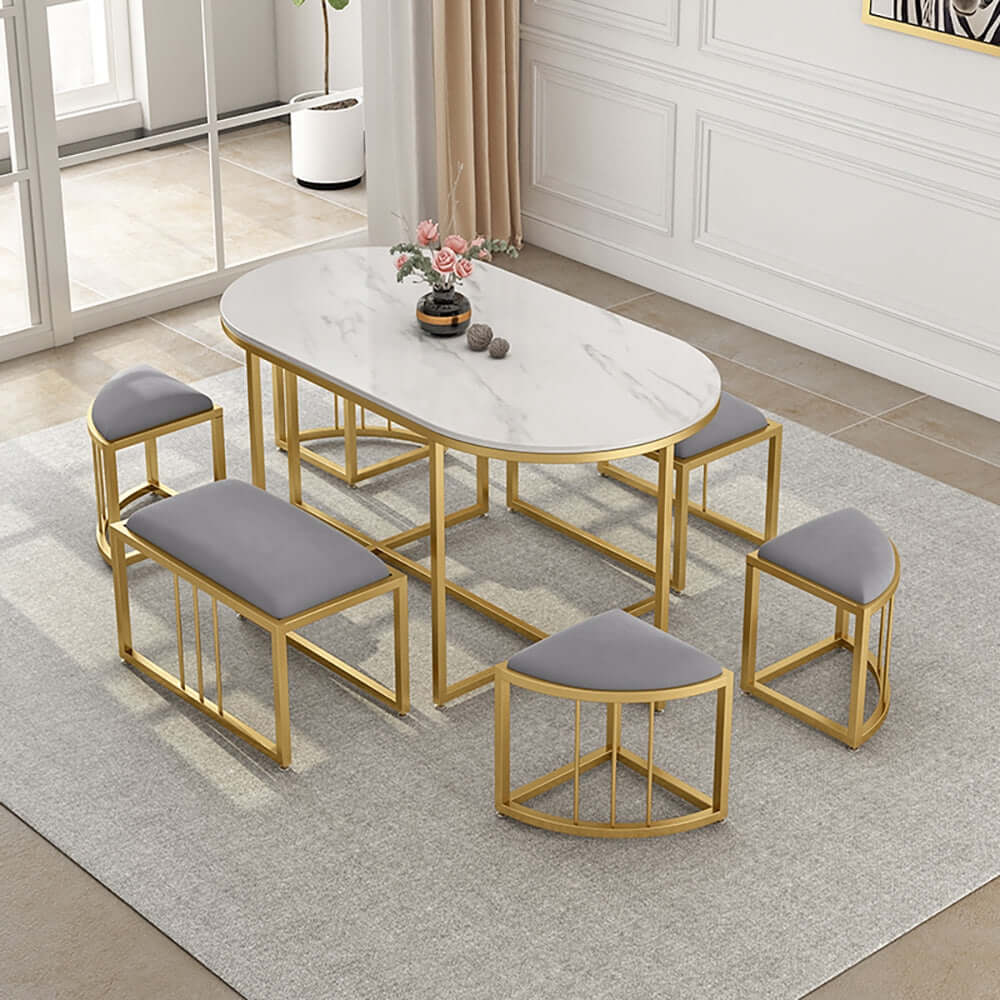
Sintered Stone Dining Tables
- Curated range of round, rectangular and extendable designs
- Heat-, scratch- and stain-resistant sintered stone tops
- Styles from minimalist to French vintage for every dining room
1. What Exactly is Sintered Stone?
To understand why a sintered stone table is so special, we first need to look at how it is created. Sintered stone is not a natural stone like marble or granite, nor is it a traditional engineered stone like quartz. Instead, it is a 100% natural material made from minerals like silica, quartz, and feldspar, which are processed using a high-tech method known as sintering[1]. This process essentially mimics the way natural stone is formed deep within the Earth over millions of years, but it accelerates the timeline using advanced industrial technology.

The sintering process involves two main stages. First, the raw minerals are subjected to extreme pressure—often exceeding 400 bars—which compacts them into a dense mass. Next, this mass is fired in a kiln at temperatures reaching up to 1200°C (about 2200°F)[2]. This intense heat causes the mineral particles to fuse together without actually melting into a liquid state. The result is a solid, ultra-dense slab that is virtually non-porous and incredibly hard. In my experience, the best way to think of sintered stone is as a "high-performance ceramic" that has been engineered to have the look and feel of the finest natural stones while eliminating their inherent weaknesses.
One of the most significant advantages of this process is that it requires no chemical binders or resins. Unlike quartz, which uses petroleum-based resins to hold the minerals together, sintered stone is entirely mineral-based. This makes it a more environmentally friendly and "cleaner" material for your home. It does not emit volatile organic compounds (VOCs) and is completely food-safe, which is a critical consideration for any surface where you will be preparing or eating meals.
2. Is Sintered Stone Good for Dining Tables?
When clients ask me, "is sintered stone good for dining table use?", my answer is a resounding yes. In fact, for most modern households, it is arguably the best material available. A dining table is one of the most hardworking pieces of furniture in a home. It is where we eat, where children do their homework, and where we host friends for long evenings of conversation. This means the surface needs to withstand heat, scratches, spills, and heavy impact. Sintered stone excels in every one of these categories.
2.1. Unmatched Heat Resistance
One of the most impressive features of a sintered stone dining table is its ability to handle heat. Because the material is born in a kiln at 1200°C, it is naturally immune to thermal shock. You can take a hot pot directly from the stove and place it on the table without a trivet, and the surface will not crack, scorch, or discolor[3]. This is a game-changer for hosting, as it removes the constant worry about damaging the table with hot serving dishes. In practice, I have found that this level of heat resistance provides a peace of mind that you simply don't get with wood, marble, or even quartz.
2.2. Scratch and Impact Durability
Sintered stone is incredibly hard, ranking high on the Mohs scale of mineral hardness. It is virtually impossible to scratch with common household items like knives, keys, or ceramic plates. While I always recommend using a cutting board to protect your knives (as the stone is harder than the steel and will dull your blades), the table itself can handle direct contact without a mark. Furthermore, its high density makes it resistant to impact. While no material is completely indestructible—a heavy cast-iron pot dropped on a sharp edge could still cause a chip—sintered stone is significantly more resilient than natural marble or glass.
2.3. Stain Resistance and Hygiene
Because the sintering process eliminates almost all porosity, the material has a water absorption rate of nearly zero. This means that liquids like red wine, coffee, or olive oil cannot penetrate the surface and cause permanent stains[4]. Spills simply sit on top until you wipe them away. This non-porous nature also makes it exceptionally hygienic. Bacteria and mold have no place to hide or grow, making it a safe surface for food preparation. For families with young children, this ease of sanitization is a major benefit that shouldn't be overlooked.
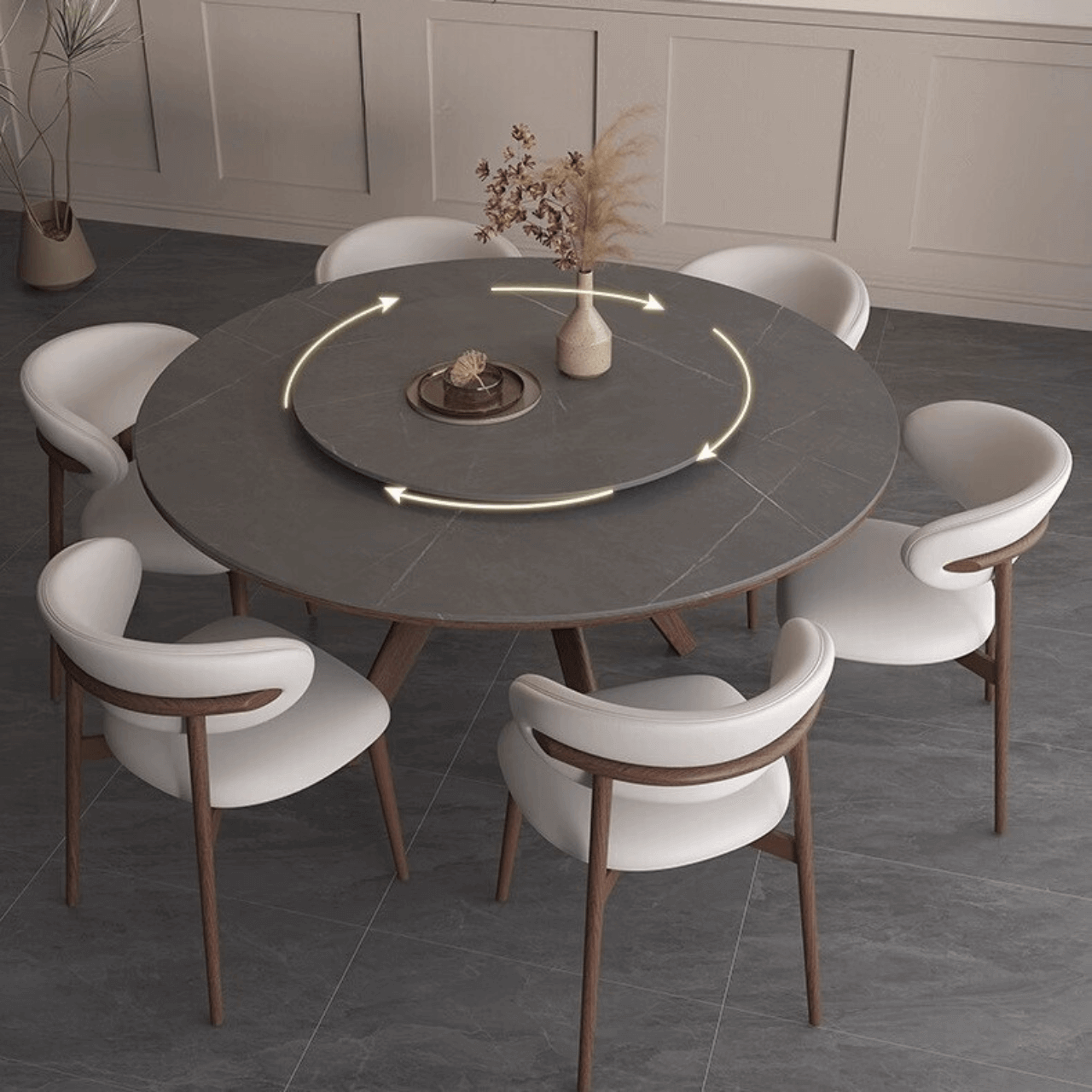
Round Sintered Stone Dining Table with Lazy Susan
- Grey sintered stone top, heat- and scratch-resistant for daily meals
- Rotating Lazy Susan for effortless sharing and serving
- Solid wood legs and rounded edges for safety and stability
3. Sintered Stone vs. Marble vs. Quartz: The Ultimate Comparison
To truly appreciate the value of a sintered stone table, it helps to compare it to the two most popular alternatives: natural marble and engineered quartz. While all three can look beautiful, their performance characteristics vary wildly. In my professional opinion, sintered stone represents the next evolution in furniture materials, taking the best qualities of its predecessors while fixing their flaws.
3.1. Sintered Stone vs. Marble
Marble is the classic choice for luxury, but it is notoriously high-maintenance. It is a porous, soft stone that "breathes." This means it must be professionally sealed every 6 to 12 months to prevent staining. Even with sealing, marble is highly sensitive to acids; a squeeze of lemon juice or a splash of vinegar can "etch" the surface, leaving a dull, permanent mark. Sintered stone, on the other hand, offers the same breathtaking veining and patterns as marble but requires zero sealing and is completely resistant to acid etching. You get the timeless look of Carrara or Calacatta marble without the constant anxiety of damaging it.
3.2. Sintered Stone vs. Quartz
Quartz is often touted as the durable alternative to marble, but it has a significant weakness: heat. Quartz is made of about 90-93% mineral and 7-10% resin binders[5]. These resins are essentially plastic, and they can melt or scorch if exposed to high heat. If you place a hot pan on a quartz table, you risk leaving a permanent yellow or brown burn mark. Sintered stone contains no resins, so it is truly heat-proof. Additionally, quartz is not UV-stable; if placed near a sunny window or used outdoors, the resins will eventually yellow and degrade. Sintered stone is 100% UV resistant, meaning its colors will never fade, even in direct sunlight.
| Feature | Sintered Stone | Natural Marble | Engineered Quartz |
|---|---|---|---|
| Heat Resistance | Excellent (up to 1200°C) | Moderate (can crack) | Low (resins can melt) |
| Stain Resistance | Excellent (non-porous) | Low (requires sealing) | High (but can stain) |
| Scratch Resistance | Superior | Low (soft stone) | High |
| UV Stability | 100% Stable | Stable | Unstable (will yellow) |
| Maintenance | Very Low | High | Low |
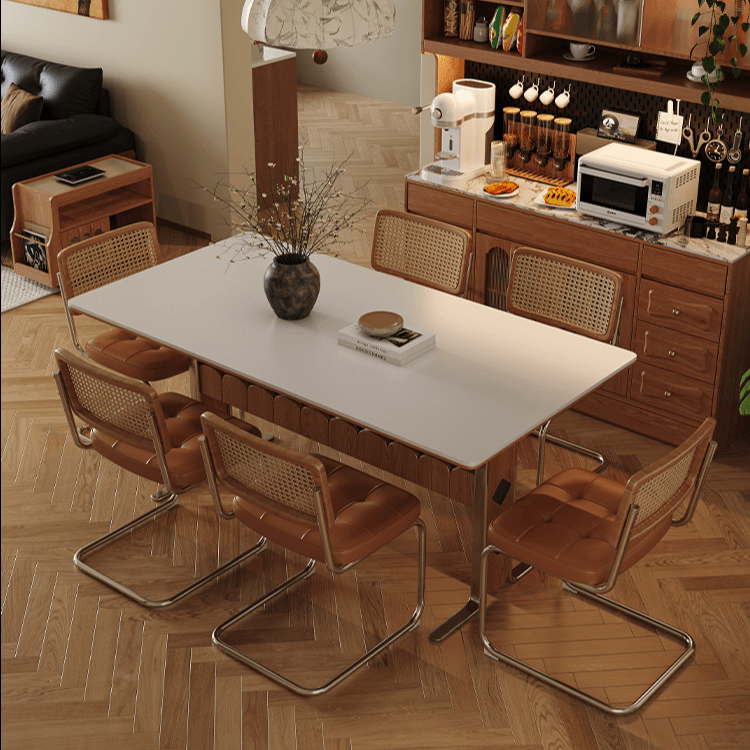
French Vintage Sintered Stone Dining Table with Storage
- Sintered stone top with 9-level Mohs hardness, scratch- and heat-proof
- FAS grade ash wood and 304 stainless steel legs for lasting stability
- Space-saving under-table storage for everyday essentials
4. Choosing the Perfect Sintered Stone Table for Your Space
Once you have decided on the material, the next step is choosing the right shape and configuration for your home. Sintered stone is incredibly versatile and can be cut into almost any form, allowing for a wide range of design possibilities. Here is how to decide which type of sintered stone table is right for you.
4.1. Round Sintered Stone Dining Tables
A round sintered stone dining table is the ultimate choice for fostering conversation. Without sharp corners, everyone at the table is facing each other, making it perfect for intimate dinners and family game nights. Round tables are also excellent for smaller dining areas or open-plan spaces, as they allow for better flow and movement around the room. In my experience, a round table with a pedestal base is particularly effective, as it eliminates leg interference and allows you to squeeze in an extra chair when needed.
4.2. Rectangular Sintered Stone Dining Tables
For those who frequently host large groups or have a dedicated formal dining room, a rectangular sintered stone dining table is the classic choice. Its linear shape anchors the room and provides ample space for elaborate place settings and centerpieces. Because sintered stone slabs can be produced in very large sizes, you can find stunning rectangular tables that seat 8, 10, or even 12 people without any visible seams in the stone. This creates a sense of grandeur and luxury that is hard to achieve with other materials.
4.3. Extendable Sintered Stone Dining Tables
If you live in a space where you need flexibility, an extendable sintered stone dining table is a brilliant solution. These tables feature clever mechanical systems that allow the stone surface to expand when you have guests. Many people worry that an extendable table might feel flimsy, but when paired with a heavy, dense material like sintered stone, the result is incredibly stable and high-end. It gives you the best of both worlds: a compact footprint for daily life and a large surface for special occasions.
4.4. Sintered Stone Coffee Tables
Don't limit this material to the dining room. A sintered stone coffee table can elevate your living room while providing a surface that can handle everything from heavy art books to wet coffee mugs and even the occasional pair of feet. Because coffee tables are often in the center of high-traffic areas, the scratch and stain resistance of sintered stone is a massive advantage. It stays looking brand new even in a home with pets and children.
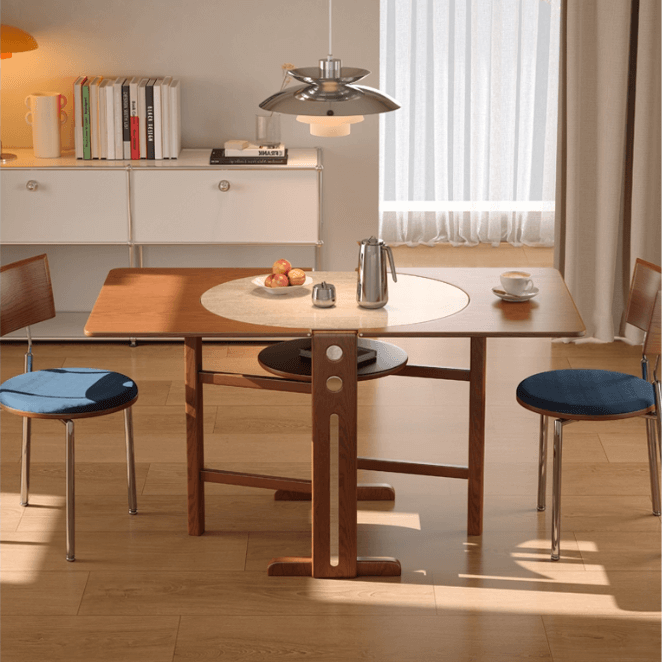
Brown Sintered Stone Round Dining Table with Drop Leaf
- Double drop-leaf design for space-saving versatility
- Heat- and scratch-resistant brown sintered stone top
- Solid wood legs with a smooth folding mechanism
5. How to Clean and Maintain Your Sintered Stone Table
One of the biggest selling points of this material is how easy it is to live with. However, knowing how to clean sintered stone table surfaces correctly will ensure they remain in pristine condition for decades. Unlike wood, which needs polishing, or marble, which needs sealing, sintered stone is remarkably low-maintenance.

5.1. Daily Cleaning Routine
For everyday messes, all you need is a soft cloth or sponge and some warm water. Because the surface is non-porous, dust and crumbs won't get trapped. If you have greasy residue from a meal, a drop of mild dish soap is usually all it takes to cut through the grime. I always recommend drying the surface with a clean microfiber towel after washing to prevent water spots, especially on darker or high-gloss finishes. This simple routine keeps the stone looking vibrant and clean.
5.2. Dealing with Tough Stains
While it is very difficult to stain sintered stone, occasionally you might encounter a stubborn mark—perhaps dried-on food or a scuff from a metal object. In these cases, you can use a non-abrasive cream cleaner or a specialized stone cleaner. For very tough residues like permanent marker or paint, you can even use stronger solvents like acetone or thinners, as the stone is chemically resistant and won't be damaged by these substances[6]. Just be sure to rinse the area thoroughly with water afterward.
5.3. What to Avoid
Even though it is incredibly durable, there are a few things you should avoid to protect your investment:
- Avoid Acidic Cleaners: While sintered stone is much more resistant to acid than marble, prolonged exposure to very harsh acidic cleaners (like some industrial descalers) can eventually dull the finish. Stick to pH-neutral soaps.
- Protect the Edges: The weakest point of any stone table is the edge. Avoid hitting the edges with heavy metal objects, as this could cause a chip.
- Use Cutting Boards: As mentioned earlier, the stone is harder than your knives. Cutting directly on the table won't hurt the stone, but it will ruin your expensive cutlery!
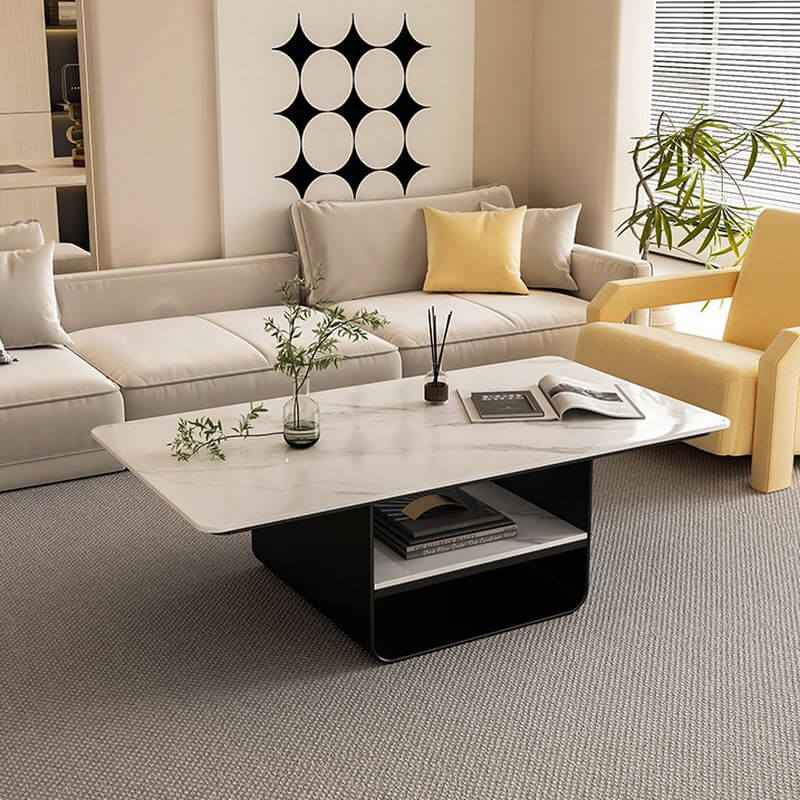
Sintered Stone Coffee Tables
- Sleek tops that shrug off heat, scratches and coffee rings
- Geometric, plinth and shelved designs for the living room
- Low-maintenance surfaces that stay looking brand new
6. The Environmental Impact: A Sustainable Choice
In today's world, many of us are looking for ways to make more sustainable choices for our homes. Sintered stone is an excellent option for the eco-conscious consumer. First, it is made from 100% natural minerals, meaning it doesn't rely on the petroleum-based resins found in quartz or the harsh chemicals used in some wood finishes. The manufacturing process is also becoming increasingly efficient, with many factories recycling up to 95% of the water used and reusing heat from the kilns.
Furthermore, the sheer longevity of a sintered stone table makes it a sustainable choice. In a world of "fast furniture" that ends up in landfills after a few years, a piece of furniture that can last a lifetime is the ultimate form of sustainability. When you invest in a high-quality sintered stone piece, you are buying something that won't need to be replaced due to wear and tear. And if you ever do decide to part with it, the material is 100% recyclable, as it can be crushed back down into its mineral components.
Frequently Asked Questions (FAQs)
Does sintered stone chip easily?
Sintered stone is very dense and impact-resistant, making it much less likely to chip than marble or glass. However, like any stone or ceramic material, the edges are the most vulnerable part. A very hard blow from a heavy object on a sharp edge could cause a chip. Choosing a table with slightly rounded or beveled edges can further reduce this risk.
Can I use my sintered stone table outdoors?
Yes! This is one of the biggest advantages of sintered stone. It is completely UV-resistant, so the colors won't fade in the sun. It is also frost-resistant and won't crack in freezing temperatures. Whether it's for a patio dining set or an outdoor coffee table, sintered stone is an ideal material for all-weather use.
Is it worth the investment?
While a sintered stone table often carries a higher price tag than wood or glass, most owners find it to be well worth the investment. When you consider that it requires no maintenance, won't stain or scratch, and will likely last for decades, the "cost per year" is actually very low. It is a piece of furniture that retains its beauty and function long after other materials have begun to show their age.
Can I cut directly on the surface?
Technically, yes. The stone is harder than steel, so your knife won't scratch it. However, I strongly advise against it because the stone will dull your knives almost instantly. It's always better to use a cutting board to protect your kitchen tools, even if the table itself can handle the blade.
What is sintered stone called in other languages?
The same material is known by different names around the world. In German it is commonly called Sinterstein (a sintered stone table is a Sinterstein Tisch, and a dining table a Sinterstein Esstisch), while in Spanish it is referred to as piedra sinterizada (a table being a mesa de piedra sinterizada). Despite the different names, the performance and composition are identical.
Conclusion
Choosing a new table for your home is a significant decision. It is an investment in your daily comfort and the aesthetic of your living space. After years of observing how different materials perform in real-world conditions, I am convinced that sintered stone offers the most compelling package for the modern homeowner. It provides the raw, natural beauty of the finest marbles with a level of durability that was previously only found in industrial settings. From its incredible heat and scratch resistance to its eco-friendly composition and ease of maintenance, it truly is a "super material."
Whether you are drawn to the social benefits of a round sintered stone dining table, the classic elegance of a rectangular sintered stone dining table, or the sheer versatility of an extendable sintered stone dining table, you are choosing a piece that will stand the test of time. You no longer have to choose between a beautiful home and a functional one. With sintered stone, you can have both. If you are ready to elevate your home with a piece that combines cutting-edge technology with timeless design, I encourage you to explore the possibilities of this remarkable material. Your future self—and your dining room—will thank you.
Ready to find the perfect centerpiece for your home? Discover our curated selection of premium designs and experience the beauty of sintered stone for yourself by visiting our Sintered Stone Table Collection today. For more inspiration, browse our guides on choosing the right sintered stone table for your space.
References
-
The Spruce: What Is Sintered Stone?
https://www.thespruce.com/what-is-sintered-stone-7564997
A comprehensive overview of the material's composition and manufacturing process. -
Better Homes & Gardens: Guide to Sintered Stone Countertops
https://www.bhg.com/what-is-sintered-stone-7485855
Detailed insights into the pros and cons of using sintered stone in home environments. -
Povison: Is Sintered Stone Good for Dining Tables?
https://www.povison.com/blog/get-the-style/is-sintered-stone-good-for-dining-tables.html
A practical look at how the material performs specifically as a dining surface. -
NT Pavers: Sintered Stone vs. Quartz
https://ntpavers.com/sintered-stone-vs-quartz/
A technical comparison between sintered stone and engineered quartz materials. -
Waysaving: How Do I Maintain and Clean a Sintered Stone Table?
https://waysaving.com/blogs/news/how-do-i-maintain-and-clean-a-sintered-stone-table
Expert advice on the daily care and long-term maintenance of sintered stone surfaces.

Written by Mia Taylor
Mia Taylor has been exploring the worlds of home design, travel, and fashion since 2022. With a foundation in interior design and hands-on experience in a furniture store, she shares stories and insights that inspire readers while creating a genuine emotional connection.

COCOCHAIRS Programs
At COCOCHAIRS, we craft modern furniture with timeless design and reliable craftsmanship for homes and commercial spaces.
B2B Trade Program: Trade pricing & project support → https://cocochairs.com/pages/b2b
Affiliate Program: Earn 10% per sale, free to join → https://cocochairs.com/pages/affiliate


