
How to Choose the Perfect Outdoor Bench for Your Space
There is something quietly transformative about sitting on a well-placed bench in your own garden. The world slows down. The scent of blooming jasmine drifts by. A good outdoor bench does more than provide a seat — it creates a destination within your landscape, a reason to step outside and linger. But choosing the right one? That can feel surprisingly overwhelming. Between the dizzying array of materials, styles, and sizes, it is easy to end up with a bench that looks beautiful in a catalog but feels wrong in your space.
In my experience helping homeowners and designers select outdoor seating, the best choices come from understanding a few core principles: what material suits your climate, what dimensions fit your space, and what style tells the story you want your garden to tell. In this guide, I will walk you through each of these considerations — and a few most buying guides overlook — so you can choose an outdoor bench with confidence.

1. Understanding Outdoor Bench Materials
The material of your outdoor bench affects everything — how it looks, how long it lasts, and how much care it demands. I have seen benches that crumbled after a single winter and others that have gracefully aged for decades. The difference almost always comes down to material choice.
1.1. Wood
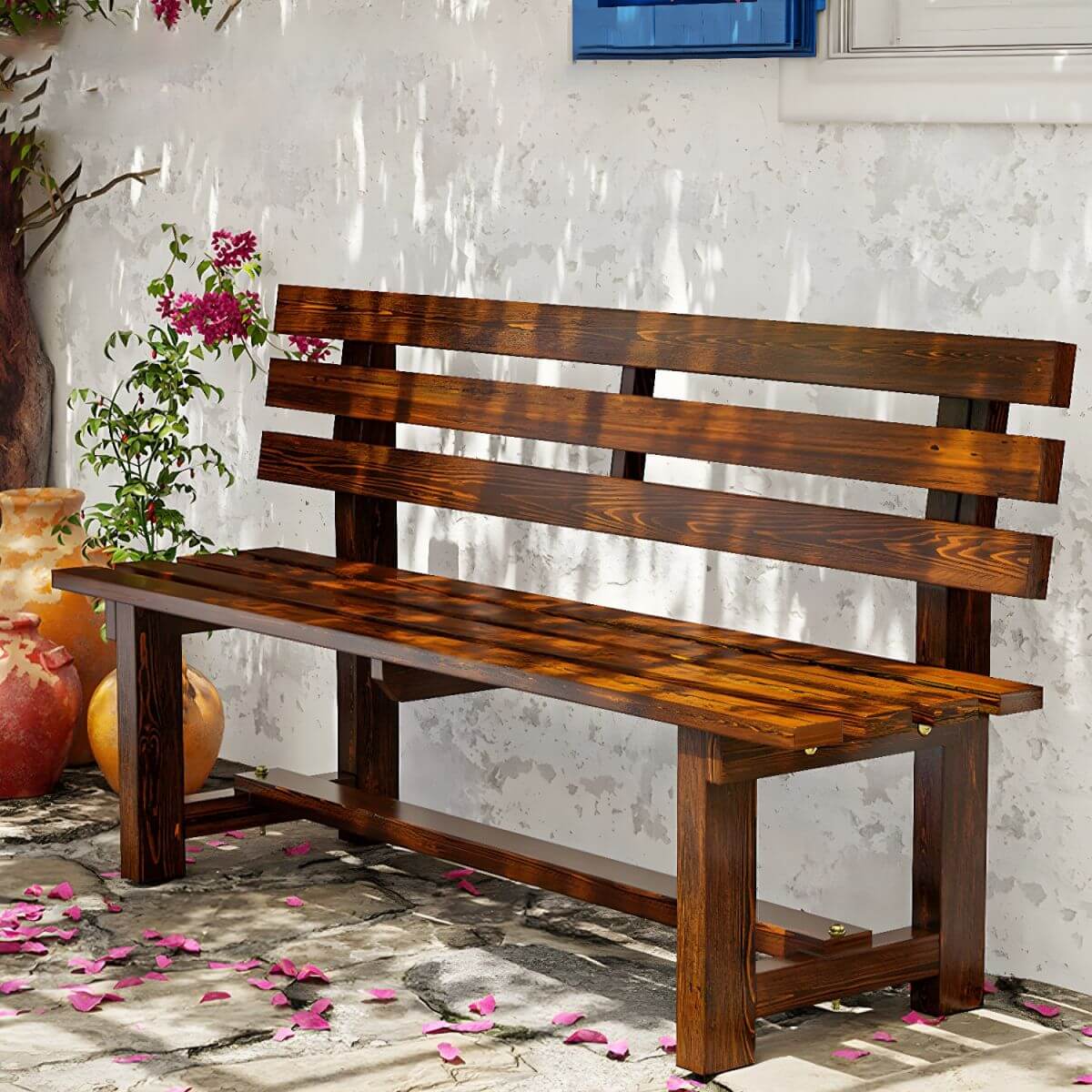
Wood remains the most popular choice for outdoor benches, and for good reason. It brings warmth, character, and a natural connection to the landscape that no synthetic material can truly replicate.
- Hardwoods (teak, oak, acacia): Teak is the gold standard for outdoor wood furniture. Its natural oils make it remarkably resistant to moisture, insects, and rot. Over time, teak develops a distinguished silver-gray patina that many homeowners actually prefer. Oak and acacia are excellent alternatives — dense, durable, and visually striking.
- Softwoods (cedar, pine): Cedar offers natural rot resistance and a pleasant aromatic scent, making it a solid mid-range option. Pine is more accessible but requires regular sealing and staining to withstand outdoor conditions.
- Engineered wood: Some modern benches use high-density composite woods that resist warping and cracking. These can be a smart choice if you want the wood look with less upkeep.
 SHOP NOW! ☝️
1.2. Metal
Metal benches offer a completely different aesthetic — one of permanence, elegance, and architectural presence. They are particularly well-suited to formal gardens, urban courtyards, and spaces that call for a sculptural element.
- Cast iron: Heavy, ornate, and timeless. Cast iron benches often feature intricate scrollwork and curving lines inspired by Victorian or Rococo design. Their weight is an advantage in windy areas but makes them difficult to reposition.
- Steel (powder-coated): Powder-coated steel provides the strength of metal with a protective finish that resists rust and scratching. It is a practical choice that comes in a wide range of colors and modern profiles.
- Aluminum: Lightweight yet strong, aluminum benches are easy to move and naturally rust-resistant. They are ideal for coastal areas where salt air rapidly corrodes other metals.
1.3. Other Materials
Beyond wood and metal, several other materials deserve consideration depending on your needs and environment.
- Concrete: Virtually indestructible and requires almost no maintenance. Concrete benches work beautifully in parks, large estates, and minimalist landscapes. Their heft makes them a true permanent fixture.
- Resin wicker: Synthetic wicker woven over an aluminum frame gives you the classic look of rattan with none of the fragility. It is lightweight, weather-resistant, and surprisingly comfortable.
- Recycled plastic: An eco-friendly option that has improved dramatically in recent years. Modern recycled plastic benches can mimic the look of painted wood while being impervious to rot, insects, and fading.

2. Finding the Right Size and Dimensions
Size is one of the most commonly overlooked factors when shopping for an outdoor bench. A bench that is too large overwhelms a small patio; one that is too small looks lost in a sprawling garden. Getting the proportions right is essential.
2.1. Standard Dimensions
Most outdoor benches fall within these general ranges:
| Dimension | Typical Range | Consideration |
|---|---|---|
| Width | 36 – 72 inches | Wider benches seat more people but need more space |
| Seat Height | 17 – 19 inches | Should allow feet to rest flat on the ground |
| Seat Depth | 16 – 22 inches | Deeper seats suit cushions; shallower ones are easier to exit |
| Back Height | 24 – 36 inches | Taller backs offer more support and visual presence |
2.2. Matching Bench Size to Your Space
Before you start browsing, measure the area where you plan to place the bench. Leave at least 18 inches of clearance on all sides for comfortable access. If the bench will sit at a table, account for the table height and legroom. In my experience, a 4-foot bench is ideal for intimate spaces like a front porch or a small garden nook, while 5-to-6-foot benches work well for larger patios and gathering areas.
Think about how many people will typically use the bench at once. A good rule of thumb is to allow roughly 24 inches of seating width per person. A 48-inch bench comfortably seats two adults, while a 60-inch bench can accommodate three.
 SHOP NOW! ☝️
3. Exploring Outdoor Bench Styles
Style is where a bench stops being merely functional and starts becoming a statement. The right style anchors your outdoor space, reinforcing the design language of your home and garden.
3.1. Traditional and Rustic
Traditional benches draw on classic design elements — turned legs, slatted backs, and decorative armrests. They evoke a sense of heritage and craftsmanship that pairs beautifully with cottage gardens, farmhouse landscapes, and country estates. Rustic variations embrace natural imperfections in the wood, celebrating knots, grain patterns, and organic textures.
3.2. Modern and Minimalist
Modern outdoor benches favor clean lines, geometric forms, and understated elegance. Think flat slats, angular frames, and monochromatic finishes. These benches complement contemporary architecture, urban rooftops, and minimalist landscapes where less truly is more. What I find compelling about modern designs is how they let the surrounding environment — the plants, the sky, the hardscape — become the visual focus.
3.3. Ornate and Decorative
For those who want their bench to be a focal point rather than a backdrop, ornate styles deliver. Inspired by European ironwork traditions — from French Rococo to English Victorian — these benches feature flowing curves, floral motifs, and sculptural details that elevate them to functional art. A single ornate bench can define the character of an entire garden.
 SHOP NOW! ☝️
3.4. Functional Styles
Some benches are designed to do double duty, combining seating with additional functionality that makes them especially practical for smaller spaces.
- Storage benches: A hinged seat lifts to reveal a storage compartment — perfect for stowing garden tools, cushions, or outdoor toys. This style keeps your space tidy without requiring a separate storage solution.
- Garden benches with trellis: These combine a backrest with an integrated trellis or arch that supports climbing plants. Over time, the bench becomes part of the garden itself, wrapped in jasmine, clematis, or climbing roses.
- Glider and swing benches: Gentle motion adds a layer of relaxation that stationary benches simply cannot match. Gliders move on a smooth mechanical track, while swing benches hang from chains or a freestanding frame.

4. Weather Resistance and Maintenance
An outdoor bench lives in the elements — sun, rain, snow, and humidity. How well it holds up depends largely on the protective measures built into its design and the maintenance you are willing to invest.
4.1. Waterproof Finishes and Treatments
Wood benches benefit enormously from a quality waterproof finish. Look for benches that come with factory-applied waterproof coatings, or plan to apply a penetrating sealant annually. Teak, as mentioned earlier, handles moisture naturally, but even teak benefits from occasional oiling if you want to maintain its original honey tone rather than letting it silver.
Metal benches should always feature a rust-resistant finish. Powder coating is the industry standard — it creates a durable, chip-resistant shell that protects the underlying metal. For cast iron, inspect the paint regularly and touch up any chips promptly to prevent rust from taking hold.
4.2. Seasonal Protection
No matter how weather-resistant your bench is, a few seasonal precautions will significantly extend its life. During harsh winter months, consider moving smaller benches to a sheltered area or covering them with fitted furniture covers. Even a simple tarp secured over the bench prevents moisture accumulation and UV damage during the off-season.
4.3. Routine Cleaning
Regular cleaning is the simplest form of maintenance. For wood benches, a gentle scrub with mild soap and water followed by thorough drying keeps mold and mildew at bay. Metal benches can be wiped down with a damp cloth and dried immediately. Avoid abrasive cleaners on any finish — they strip protective coatings faster than the weather does.
5. Comfort and Ergonomics
A bench that looks stunning but is uncomfortable to sit on for more than five minutes has failed its primary purpose. Comfort matters, and it is determined by a few key design elements.
5.1. Backrest Design
The backrest is the single most important factor in bench comfort. A well-designed backrest follows the natural curve of your spine, providing support at the lumbar region. Flat, vertical backrests look clean but offer poor support for extended sitting. Look for benches with a slight backward tilt and a gentle contour — your back will thank you during long afternoon reads.
5.2. Seat Contour and Depth
The ideal outdoor bench seat has a subtle curve — often called a "waterfall edge" — that reduces pressure on the backs of your thighs. Flat seats are acceptable for short rests, but contoured seats make a significant difference for anything beyond twenty minutes. Seat depth between 18 and 20 inches generally provides the best balance between comfort and ease of standing up.
 SHOP NOW! ☝️
5.3. Cushions and Accessories
Even the most ergonomic bench benefits from a well-chosen cushion. When selecting outdoor cushions, look for quick-drying foam cores and UV-resistant, water-repellent fabric covers. Removable, washable covers are a practical advantage that extends the life and appearance of your cushions. In my experience, investing in quality cushions transforms even a basic bench into an exceptionally comfortable seat.
6. Placement and Design Tips
Where you place your bench matters as much as which bench you choose. Thoughtful placement transforms a bench from a piece of furniture into an experience.
6.1. Garden Pathways
Placing a bench at the end of a garden path creates a natural destination — a reward for the walk. It draws the eye forward, giving the path a sense of purpose. Position it where it can be seen from the starting point, ideally framed by plantings on either side.
6.2. Patios and Porches
On a patio, a bench works beautifully as supplementary seating around a dining table or as part of a conversational grouping with chairs. On a front porch, it becomes an invitation — to neighbors, to guests, and to yourself — to sit down and stay awhile. Pair it with a side table for drinks or books to make the space truly functional.
6.3. Creating a Focal Point
Every well-designed outdoor space has a focal point — something the eye is naturally drawn to. A distinctive bench can serve this role beautifully, especially when positioned against a backdrop like a hedge, a wall of climbing roses, or an open view. Angle the bench to capture the best sight line, whether that is a mountain vista, a garden bed, or simply a favorite tree.

FAQ
What is the best material for an outdoor bench?
The best material depends on your climate and priorities. Teak is widely considered the top choice for its natural weather resistance and longevity, developing a beautiful patina over time. Powder-coated steel is excellent for durability and a modern look, while aluminum is ideal for coastal areas. If low maintenance is your priority, recycled plastic or concrete benches require virtually no upkeep.
How do I protect my outdoor bench from weather damage?
Start with a quality waterproof finish or factory-applied protective coating. Apply a penetrating wood sealant to wooden benches annually, and inspect metal benches for chips in the powder coating. During harsh winter months, use fitted furniture covers or move smaller benches to a sheltered area. Regular cleaning with mild soap and water prevents mold and mildew buildup.
What size outdoor bench do I need for my garden?
Measure your intended space first, leaving at least 18 inches of clearance on all sides. A 4-foot bench comfortably seats two adults and works well for smaller spaces, while a 5-to-6-foot bench accommodates three people and suits larger patios. Allow approximately 24 inches of seating width per person when planning.
Can outdoor benches be left outside year-round?
Most well-made outdoor benches can withstand year-round exposure, but their longevity depends on the material and protective finishes. Teak, powder-coated metal, concrete, and recycled plastic handle full exposure best. Wooden benches with waterproof coatings and metal benches with intact finishes will also fare well. For maximum longevity, covering benches during the harshest winter months is always recommended.
Conclusion
Choosing the right outdoor bench comes down to understanding your space, your climate, and your personal style. The material you select — whether it is the warmth of solid wood, the permanence of powder-coated iron, or the practicality of recycled plastic — sets the foundation for years of enjoyment. The size and dimensions should be guided by honest measurements of your space, not by how a bench looks in a showroom photograph.
What I have found most important is to think beyond the bench itself. Consider where it will sit, what you will see from it, and how it will feel after an hour of reading or a long conversation with a friend. The best outdoor benches become part of the landscape — not just furniture, but a reason to go outside and stay there.
Take your time with the decision. Measure twice. Imagine the bench in place through every season. And when you find the one that feels right — the right material, the right proportions, the right style — you will know. Your garden is waiting for that perfect finishing touch.
SHOP OUTDOOR BENCHES 👉References
- [1] Lowe's — "Explore the Best Outdoor Benches for Your Garden" — https://www.lowes.com/n/buying-guide/best-outdoor-bench — Material comparisons and buying considerations for outdoor benches
- [2] POLYWOOD — "The Complete Outdoor Benches Buying Guide" — https://www.polywood.com/blogs/buying-guides/the-complete-outdoor-benches-buying-guide — Step-by-step guide covering materials, sizing, styles, and accessories
- [3] Highwood USA — "A Complete Guide to Outdoor Benches" — https://highwood-usa.com/blogs/backyard-anywhere/a-complete-guide-to-outdoor-benches — Style selections including traditional, modern, and Adirondack-inspired benches
- [4] Premier Polysteel — "The Ultimate Guide to Choosing the Perfect Outdoor Bench for Your Space" — https://premierpolysteel.com/blog/the-ultimate-guide-to-choosing-the-perfect-outdoor-bench-for-your-space/ — Durability features and weather resistance in outdoor bench construction
- [5] Polly Products — "Outdoor Bench Buyers Guide: Ideas, Materials, Designs & Sizes" — https://pollyproducts.com/outdoor-bench-ideas-buyers-guide/ — Comprehensive material analysis including wrought iron, recycled plastic, and synthetic wood

Written by Mia Taylor
Mia Taylor has been exploring the worlds of home design, travel, and fashion since 2022. With a foundation in interior design and hands-on experience in a furniture store, she shares stories and insights that inspire readers while creating a genuine emotional connection.

COCOCHAIRS Programs
At COCOCHAIRS, we craft modern furniture with timeless design and reliable craftsmanship for homes and commercial spaces.
B2B Trade Program: Trade pricing & project support → https://cocochairs.com/pages/b2b
Affiliate Program: Earn 10% per sale, free to join → https://cocochairs.com/pages/affiliate


