
Cream Leather Sofa: How to Style and Care for Light Leather
There's a reason cream leather sofas keep showing up in the brightest, most photographed living rooms of the moment. A pale leather couch does something pure white never quite manages: it reads as warm rather than clinical, softening natural light instead of bouncing it back at you. In my own work helping people pull rooms together, I've watched a single piece of cream leather turn a dim corner into the seat everyone gravitates toward.
This guide walks through everything that matters when you're choosing and living with a cream leather sofa. We'll untangle the color question first — because "cream" gets slapped on everything from icy ivory to toasted oat — then move through the sofa types, the leather grades that actually hold up in pale shades, and how to style the piece without it washing out. Finally, we get into the part most buyers underestimate: caring for light leather, including the blue-jean dye transfer and slow yellowing that catch people off guard. By the end, you'll know exactly what to look for and how to keep it looking new.

1. Why Choose a Cream Leather Sofa?
Walk through any recent roundup of living room design and warm neutrals dominate the palette.[1] Cream sits right at the heart of that shift. Finish and color experts consistently point to warm whites and creams as the go-to neutrals for 2025 and 2026, drawn to how they read as livable rather than stark.
What separates cream from pure white is warmth. A white leather sofa can feel like a showroom prop — pristine, a little cold, and unforgiving under harsh light. Cream carries a whisper of yellow or beige underneath, which is exactly what lets it flatter skin tones in photos and feel inviting the moment you sink into it. That same undertone also makes cream far more forgiving with everyday shadows; minor creases and the natural patina leather develops over time blend in rather than announcing themselves as "damage."
Then there's the light. In my experience, cream leather earns its keep in rooms that get strong daylight. Where a white surface can glare, cream absorbs just enough light to glow softly, making a south- or west-facing living room feel like the warmest spot in the house. In dim, north-facing spaces it still reads clean without going gray the way pure white can. That adaptability — bright when you want bright, cozy when the lamps come on — is the real reason cream has pulled ahead of stark white as the pale finish of choice.
2. Cream, Ivory, Beige, or White? A Light Leather Color Guide
The light-leather category is a minefield of overlapping names, and brands use them loosely. Before you fall in love with a swatch on screen, it helps to know what each term actually describes and where it sits on the warm-to-cool spectrum.
- White — the palest end, no undertone. Bright and graphic, but the least forgiving; every mark shows.
- Ivory — a step down from white with the faintest warm tint. Elegant and traditional.
- Cream — warmer than ivory, with a soft yellow-vanilla undertone. The "livable" pale: forgiving and inviting.
- Oat / Wheat — a touch deeper, grayish-tan. Grounds a room and hides wear best of the pale group.
- Beige — clearly tan-leaning, the bridge toward brown.
The practical lever underneath all of these is warm versus cool. Hold a true white sheet of paper next to your swatch: if the leather looks yellowish beside it, it's warm; if it looks grayish or pinkish, it's cool. Matching undertones matters more than matching the shade itself — a warm cream against cool blue-gray walls will look "off" even when the darkness level is right.
As a rule of thumb, pair warm creams (yellow or peach undertones) with warm wall colors — greiges, taupes, warm whites — and warm wood floors. Cool ivories sit happily with blue-grays, true whites, and ash or whitewashed woods. When in doubt, sample the leather in the actual room and look at it at three different times of day before committing.

3. Types of Cream Leather Sofas
Cream leather comes in the same range of silhouettes as any other upholstery, but a few types pair especially well with the pale finish. The unbroken pale surface is what maximizes that light-reflecting glow, so the best shapes tend to be the clean, simple ones.
3.1 Standard Three-Seaters
The workhorse. A single clean expanse of cream leather that anchors a room. A compact 75-to-80-inch frame works in most living rooms without swallowing the space, and the uninterrupted pale surface does the most to bounce light around. This is the silhouette that makes a small or dim room feel instantly bigger.
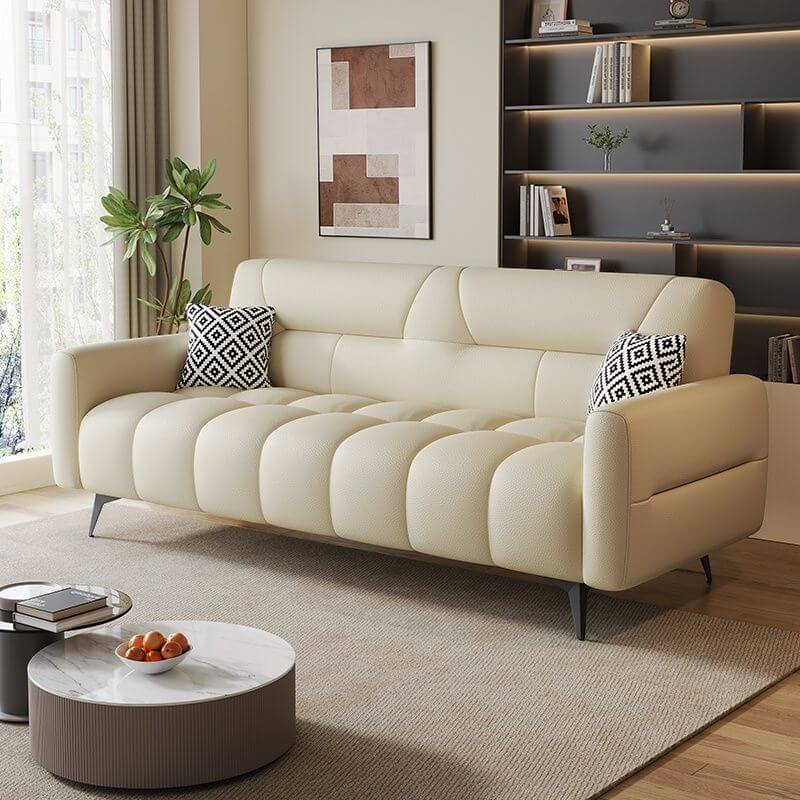
Modern Cream Leather Sofa with Plush Seating
- Cream synthetic leather with a stain-resistant, smooth finish
- Plush sponge-and-latex seat fill for balanced, supportive comfort
- Compact 79-inch footprint seats three in a bright, airy living room
3.2 Sectionals and Sleeper Sectionals
If you need seating for a crowd or a flexible layout, a sectional is hard to beat. An L-shaped or chaise sectional in cream leather keeps the room feeling open where a dark sectional would close it in. For multi-use spaces, a sleeper sectional adds a hidden pull-out bed for overnight guests and often tucks storage into the chaise — a quiet multitasker that doesn't advertise its functions.[2]
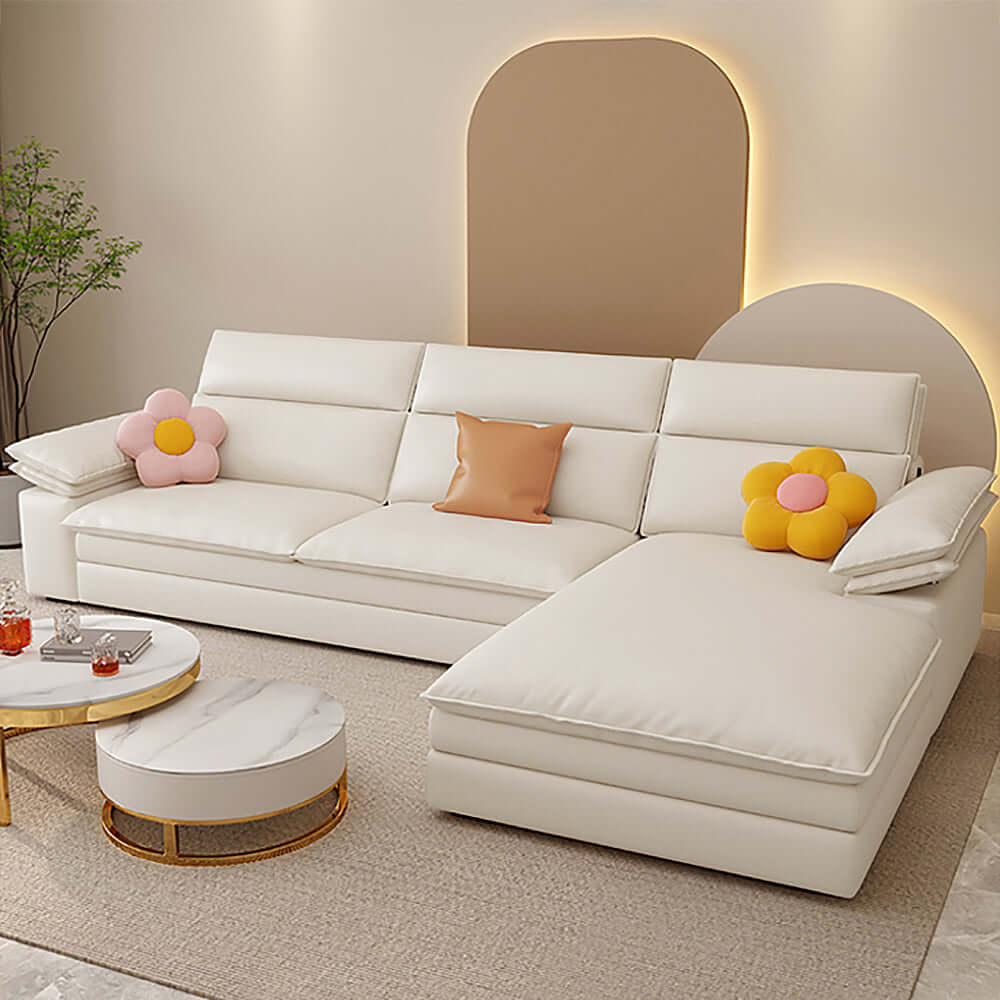
Cream Leather Reversible Sleeper Sectional with Chaise
- Reversible chaise lets you flip the layout to suit any floor plan
- Hidden pull-out queen sofa bed for overnight guests
- Built-in chaise storage plus adjustable arms and headrests
Beyond those two, reclining cream sofas lean casual and family-friendly, though the moving parts mean more seams where wear can show. Modular sectionals let you reconfigure as your room changes, and loveseats fit small apartments or pair with a larger sofa as a set. Whatever the type, the pale leather rewards clean lines and minimal fuss — every tuft, skirt, or nailhead trim is another surface to keep clean, so the styles that shine in cream tend to be the simple, tailored ones.
4. Leather Grades Explained: Which Holds Up Best in Light Colors
Not all "leather" ages the same way, and in pale shades the differences become very visible, very fast.[3] Here's how the main grades behave in cream, because the grade you choose is the single biggest factor in whether that cream stays cream.
- Full-grain leather is the top layer, with the natural grain intact. The most durable, and it develops the richest patina. In cream, that patina means it deepens and warms over years — desirable, if you like a lived-in look.
- Top-grain has the outermost surface lightly sanded to remove imperfections, then finished. The most common "nice" leather — more uniform and stain-resistant than full-grain. A solid choice for cream if you want consistency.
- Bonded (or "genuine"/blended) leather is made from leftover fibers bonded with polyurethane. The riskiest pick in pale shades: it can peel, crack, and yellow unevenly within a few years. Think hard before putting bonded leather in a sunlit cream sofa.
- Faux, synthetic, or microfiber leather (polyurethane-based, no animal hide) has come a long way. Quality versions resist stains, won't absorb dye the way naked leather can, and hold their color — including cream — without the patchiness real hide develops. They're also wipe-clean, which matters when the finish is pale.

The takeaway for light colors: if you love the character of real hide and don't mind patina, go full- or top-grain. If you want the cream to stay exactly the shade you bought, a high-quality faux or microfiber leather is often the more practical choice — and it sidesteps the dye-transfer and yellowing issues real leather is prone to. Many of the most photogenic cream sofas you see online are, in fact, beautifully finished synthetic leather.
5. How to Style a Cream Leather Sofa
A cream leather sofa is one of the most versatile pieces you can own, because a pale, warm neutral plays well with almost anything. The styling question is less "what matches" and more "what mood do you want." These are the combinations I keep coming back to.
- Warm and tonal. Layer the cream sofa with other warm neutrals — an oatmeal rug, ivory or caramel cushions, a chunky knit throw. Everything reads soft and calm, and the leather becomes the grounding element. This is the foolproof, "bright living room" look.
- Wood warmth. Pair cream leather with warm woods — walnut, oak, or rattan — and the room immediately feels organic and grounded. A wood coffee table and a cream sofa is a near-instant classic.
- Dark contrast. If all-pale feels washed out, anchor the sofa with deep contrast: a charcoal or navy rug, a dark green accent wall, or black metal lighting. The cream pops against the dark, and the room gains depth.
- Metallic accents. Brass, gold, and bronze details — a floor lamp, picture frames, or side-table legs — pick up the warmth in cream leather and add quiet luxury. Keep metallics to one tone so the room doesn't feel busy.
On rugs specifically: a cream sofa wants contrast or texture beneath it. Jute or sisal for organic texture, a muted traditional pattern for warmth, or a deep solid color for grounding. Avoid a pale rug that's too close to the sofa's shade — without contrast, the sofa disappears into the floor. A tailored three-seater in cream microfiber leather is an ideal blank canvas for any of these directions.
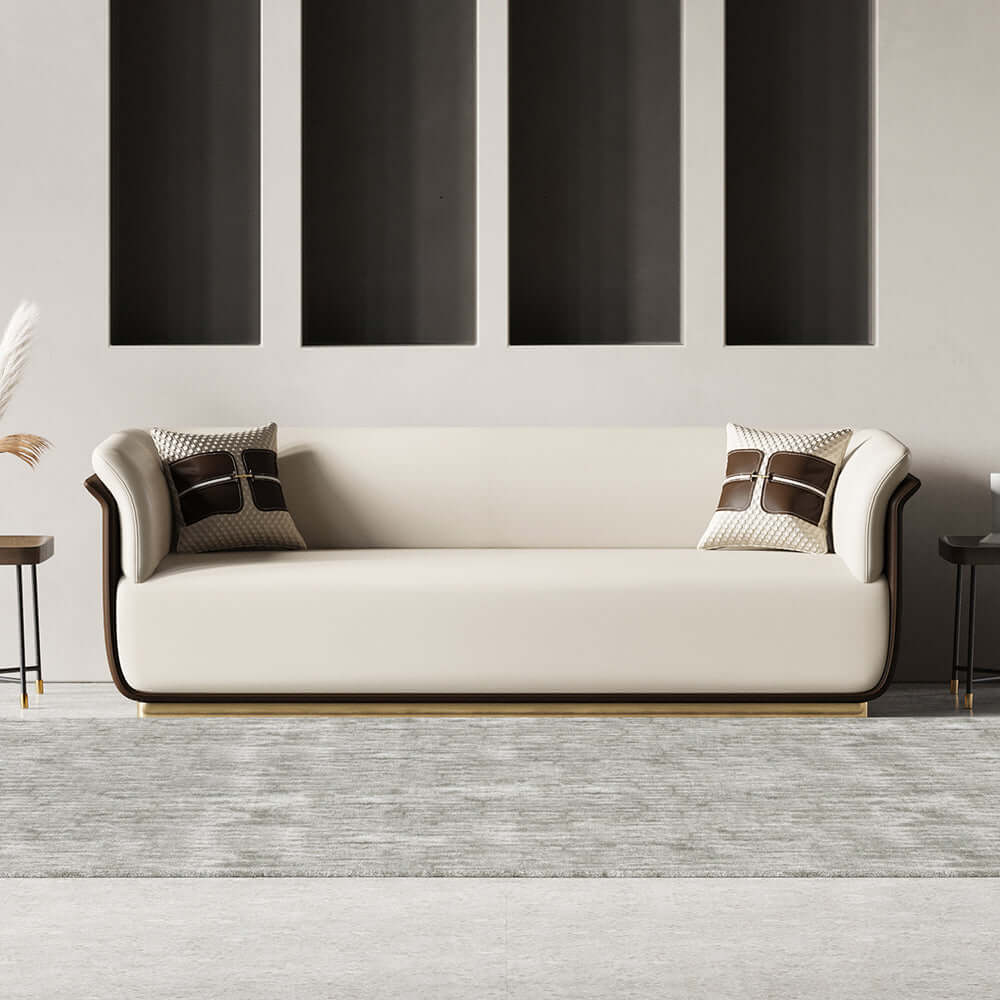
Modern Cream Leather 3-Seater Sofa with Wood Frame
- Solid wood frame and high-density foam for lasting, supportive comfort
- Cream microfiber leather with a tailored, light-luxury finish
- Clean rectangular silhouette that anchors any living room
Whichever direction you choose, let the sofa be the calm anchor and add personality through the pieces around it. That's the secret to keeping a cream leather sofa looking intentional rather than like a placeholder waiting for a "real" couch.
6. Caring for a Cream Leather Sofa: Stains, Dye Transfer & Yellowing
This is the section that decides whether your cream sofa still looks good in five years. Light leather shows everything, but it's not hard to maintain if you build a few simple habits — and the visual below sums up the rhythm.

6.1 The Weekly-to-Yearly Rhythm
Weekly. Dust and wipe with a dry microfiber cloth. Pale leather is a magnet for airborne grease, which is what slowly turns it yellow — a quick wipe keeps that buildup from setting in. Monthly to quarterly, wipe down with a damp cloth and a drop of mild, pH-neutral soap, or a dedicated leather cleaner. Never use harsh household cleaners, alcohol, baby wipes, or abrasive sponges — these strip the finish and can leave permanent light spots on cream leather faster than you'd believe.[3] Twice a year, condition the leather so its protective finish stays intact.
6.2 The Blue-Jean Problem
Dark denim transfers dye onto pale leather, and it's the single most common complaint with cream sofas. The dye migrates through heat and body moisture. To stay ahead of it: wipe high-contact spots weekly, keep the leather conditioned so its protective finish is unbroken, and consider keeping dark denim off a brand-new sofa for the first few months. If transfer appears, a dedicated leather dye-transfer remover (not a general stain remover) lifts most of it if caught early. The good news for owners of synthetic and microfiber leather: those finishes don't absorb dye the way naked real leather does, so the problem is far milder.
6.3 Preventing Yellowing and Living with Pets & Kids
Yellowing is usually oxidized body oils, airborne cooking grease, or sunlight breaking down an inferior finish. Keep the sofa out of direct, prolonged sun, ventilate when cooking, and stick to the conditioning routine. For pets, trim nails, offer a designated blanket, and wipe paw prints before they set; for kids, the same wipe-down habit handles most spills. Spills bead up on finished and synthetic leather, so you usually have time — just blot, never rub.
For the full, leather-type-specific cleaning routine, our guide to cleaning a leather sofa by leather type goes deeper on the products and the step-by-step process.
FAQ
Is a cream leather sofa hard to keep clean?
Not as hard as people fear, but it does need consistency. A weekly dry wipe removes the airborne grease that causes yellowing, and a monthly damp wipe with mild soap handles everyday marks. The bigger variable is the leather grade — finished top-grain and quality synthetic leathers wipe clean easily, while naked or bonded leather stains more readily.
Will a cream leather sofa turn yellow over time?
It can, but yellowing is preventable. It's usually caused by oxidized body oils, cooking grease in the air, or sunlight degrading a low-quality finish. Keeping the sofa out of prolonged direct sun, ventilating when you cook, and conditioning twice a year keeps the cream true. High-quality finishes and faux leathers resist yellowing far better than bonded or unprotected real leather.
How do I stop blue jeans from staining my cream leather sofa?
Dark denim transfers dye through heat and moisture. Wipe high-contact areas weekly, keep the leather conditioned so its finish stays intact, and keep new dark denim off the sofa for the first few months. If dye appears, a dedicated leather dye-transfer remover lifts most of it when caught early. Synthetic and microfiber leathers absorb far less dye than naked real leather.
What color rug goes best with a cream leather sofa?
Aim for contrast or texture. Jute and sisal add organic texture, muted traditional patterns add warmth, and deep solids like charcoal, navy, or forest green ground the room and make the cream pop. Avoid a rug too close to the sofa's own shade — without contrast, the sofa disappears into the floor.
Are cream leather sofas good for homes with pets and kids?
Yes, with a few habits. Trim pet nails, keep a designated blanket on the seat, and wipe paw prints and spills before they set. Finished and synthetic leathers are especially family-friendly because spills bead up and wipe away. Just blot, never rub, and you'll usually catch things in time.
Conclusion
A cream leather sofa earns its place by doing something no other finish manages as well: it brings warmth and light into a room at the same time. The key is knowing that "cream" covers a spectrum from cool ivory to toasted oat, so the first real decision is matching the undertone to your walls and floors. From there, pick a silhouette that keeps the pale surface clean and unbroken, choose a leather grade that matches how you live — patina-loving real hide, or stay-true synthetic leather — and style it with contrast and texture so it reads as intentional. The maintenance is less daunting than its reputation: a weekly dry wipe, a monthly damp clean, conditioning twice a year, and staying ahead of blue-jean dye transfer will keep the cream looking the way it did the day it arrived. Get those pieces right and a cream leather sofa becomes the calm, light-reflecting anchor that quietly makes the whole room feel more pulled together.
References

Written by Mia Taylor
Mia Taylor has been exploring the worlds of home design, travel, and fashion since 2022. With a foundation in interior design and hands-on experience in a furniture store, she shares stories and insights that inspire readers while creating a genuine emotional connection.

COCOCHAIRS Programs
At COCOCHAIRS, we craft modern furniture with timeless design and reliable craftsmanship for homes and commercial spaces.
B2B Trade Program: Trade pricing & project support → https://cocochairs.com/pages/b2b
Affiliate Program: Earn 10% per sale, free to join → https://cocochairs.com/pages/affiliate


